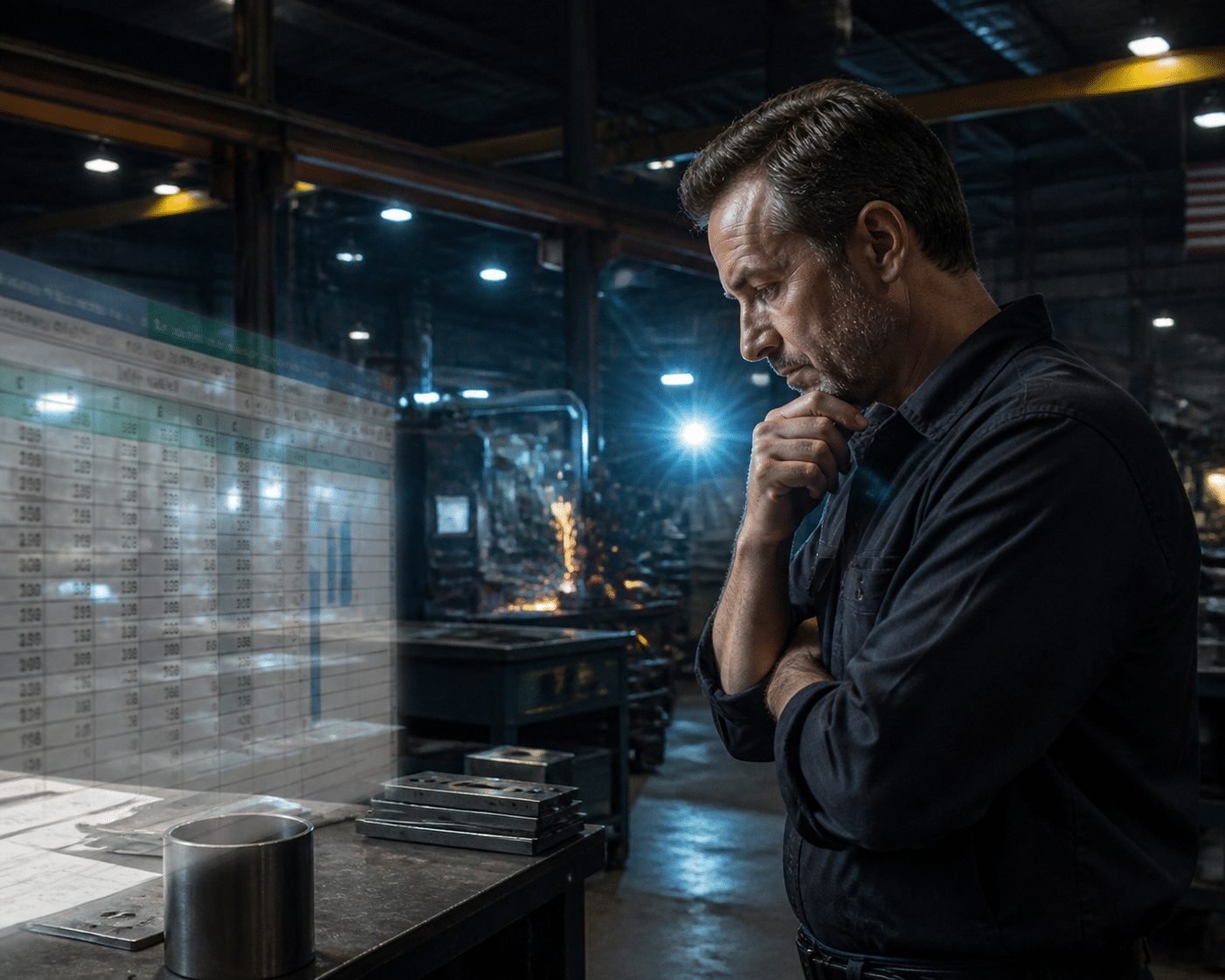
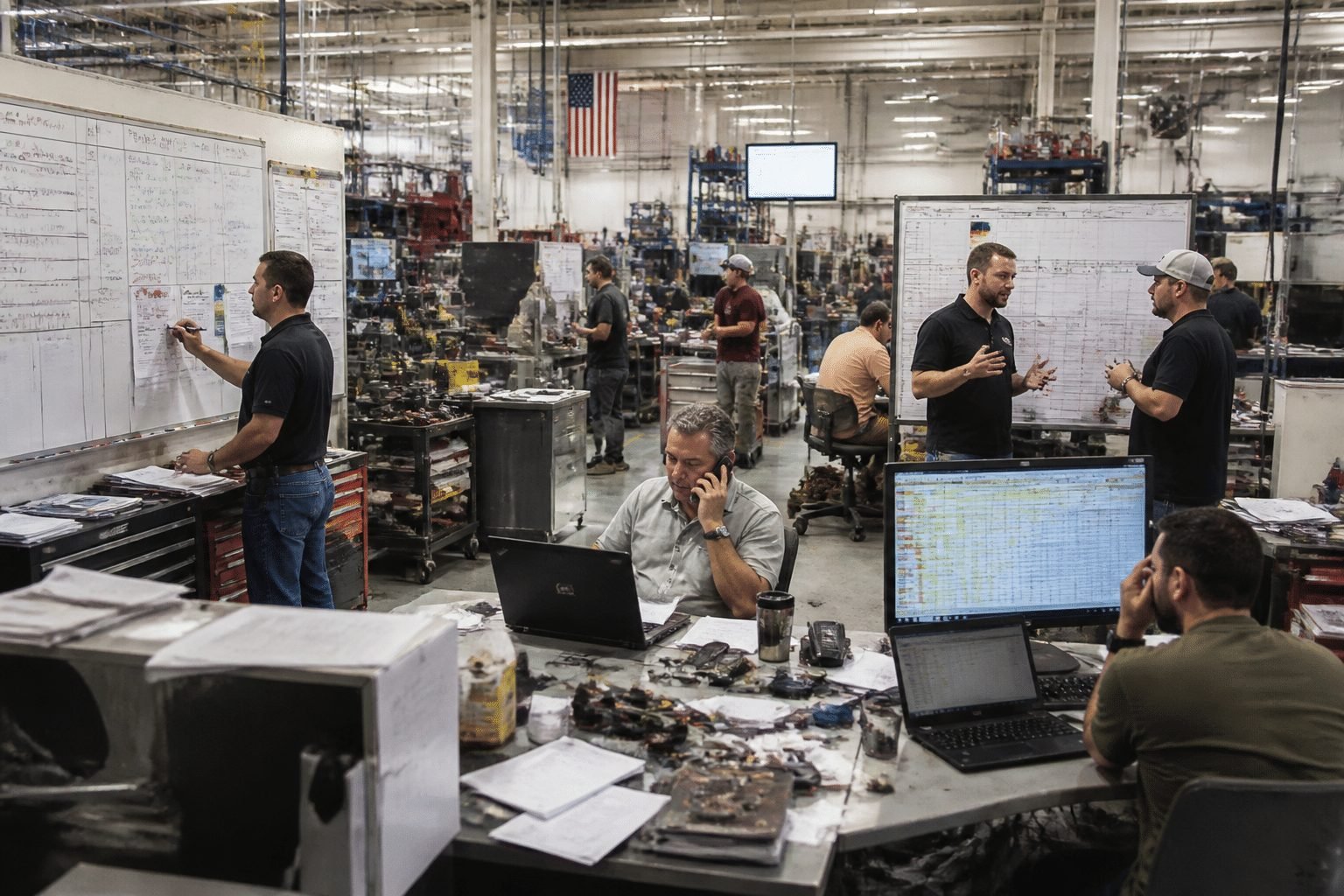
Picture a Tuesday afternoon. A buyer calls and asks where his order is. You don't know. So you put down the phone, walk onto the floor, find the supervisor, check a whiteboard, and ask two people the same question. Ten minutes later you call back with an answer that's probably right.
Sound familiar?
Most small manufacturers start the same way. Tally for accounts, Excel for planning, WhatsApp for everything else. It's cheap, everyone knows it, and honestly, it works. Until it suddenly doesn't. For a lot of factories, that break happens somewhere around the ₹5 Cr turnover mark, when more orders, more parts and more vendors turn a few spreadsheets into a guessing game. There's no official national number for this (nobody has measured it cleanly), but one 2026 vendor report from Bsquare says only 34% of Indian SME manufacturers have a fully deployed ERP. Take that with a pinch of salt, since it's not a government survey.
So here's the dilemma, especially if you're the second-generation MD who inherited this setup. You know you need a real system. But which one? An off-the-shelf platform like Odoo, or a fully custom ERP built around your factory?
Pick wrong and you're stuck with another expensive, half-used IT project. Been there, or know someone who has.
This guide gives you a clear way to compare Odoo vs. custom development on cost, risk and fit, so your next decision doesn't become your next regret.
Why Your Current 'System' is Costing More Than You Think
Nobody sends you an invoice for a messy system. That's the trouble. The cost hides inside small things that feel normal by now.
The Quiet Costs of Disconnected Tools
Start with duplicate data entry. One order gets typed into Tally, again into Excel, then pasted into a WhatsApp group. Someone mistypes a quantity, and suddenly you've got three versions of the truth.
Then there's inventory. One manufacturing ERP case study describes a plant tracking more than 200 raw materials in Excel, with frequent stock-outs as the result. A machine sits idle waiting for material that is on a shelf somewhere. Maybe. Nobody's sure.
Quoting hurts too. One quoting software vendor says manual quotes can take 30 minutes to 2 hours each (it's a vendor figure, so take it lightly). In plenty of factories, costing pulls from four places and takes days. By then your buyer has signed with the faster competitor.
I went looking for a clean number on how many SME decisions rest on bad data. It doesn't exist. But a 2025 Indian industrial case study found management reports were 24 to 48 hours old because of disconnected tools. That means you're deciding today with yesterday's news.
When Your ERP Runs at 40%
Some of you already bought an ERP. It was sold years ago and set up halfway. The team uses it for invoices, and everything else drifts back to Excel.
Here's the sneaky part. Those workarounds don't stay temporary. They become the real process. A new hire learns the spreadsheet trick, not the software, and the original investment quietly goes to waste. Sound familiar?
The Single Point of Failure Problem
Many factories lean on a local AMC vendor or one Excel guru. And honestly, I get it. They're affordable, they pick up the phone, and they know your setup.
But think about what happens when that person goes on leave. Or quits. Or just gets busy. Everything stops, because the whole system lives in one head.
There's a second problem. These folks fix what's broken. They rarely ask what should change, so the approach stays reactive instead of strategic. You get patches, not a plan.
So the real question isn't whether your current setup costs you money. It does. The question is what to replace it with, and Odoo is where most owners look first.
Understanding Odoo: The 'All-in-One' Contender for Manufacturing
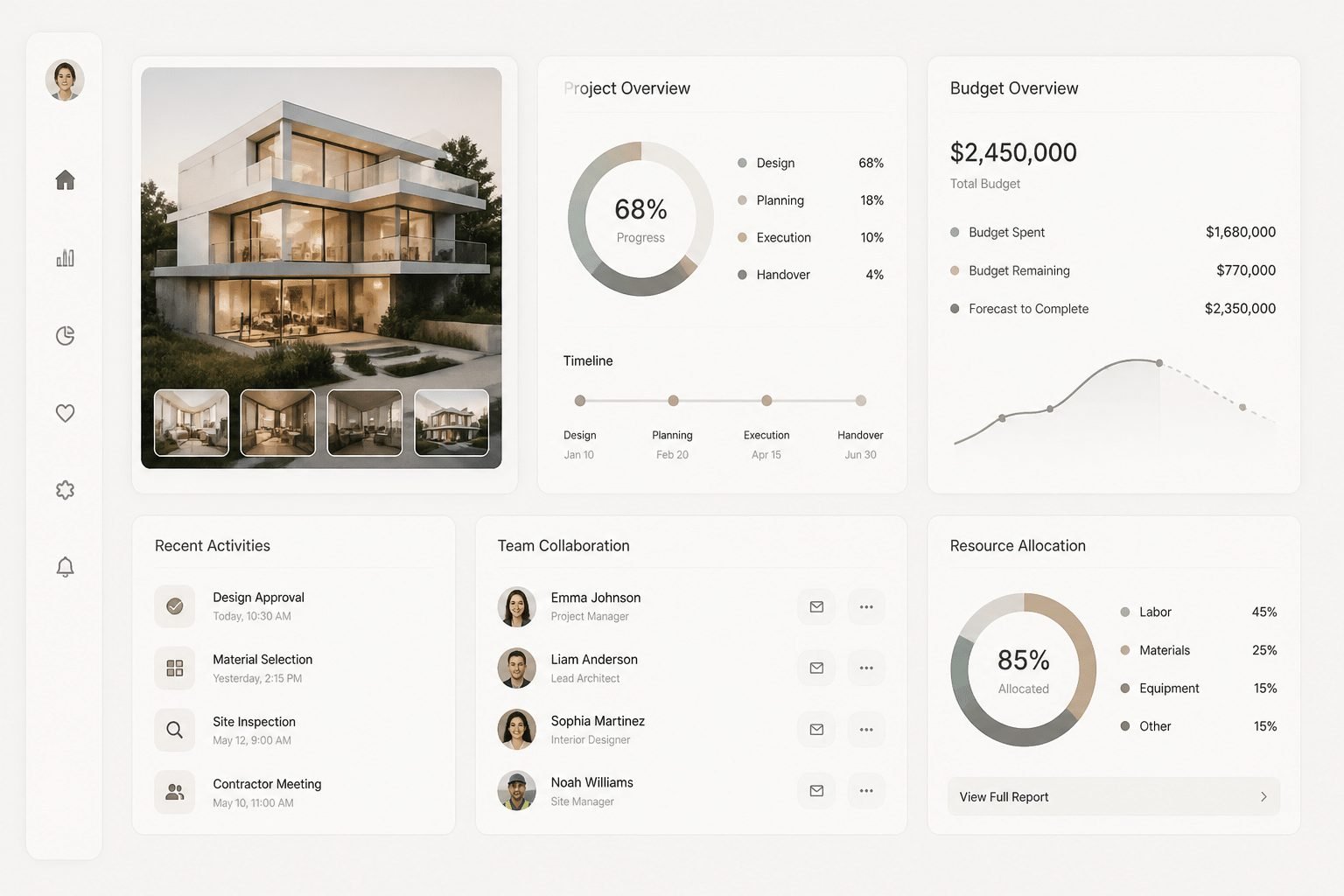
So you've decided Excel and WhatsApp can't carry you anymore. Odoo is usually the first name that comes up. Let's see what it actually is, and whether it fits a factory like yours.
What Odoo Is, in Plain Words
Think of Odoo as a box of Lego blocks for running a business. Each block is an app. There's one for Sales, one for Inventory, one for Manufacturing, one for Purchase, one for Accounting. You pick the blocks you need, and they're built to share one database.
That sharing is the whole point. When sales confirms an order, the manufacturing app can see it. When production uses steel, inventory drops. When goods ship, accounting knows. No retyping into Tally. No pasting into a WhatsApp group.
Here's how the blocks connect:
Module | What it does for your factory | What it passes along |
|---|---|---|
Sales | Quotes and confirmed orders | Demand to Manufacturing and Inventory |
Manufacturing (MRP) | Bills of materials, routings, work orders | Material needs to Purchase, finished goods to Inventory |
Inventory | Stock, batches, locations | Stock levels to Sales and Purchase |
Purchase | Vendor orders and subcontracting | Received material to Inventory, bills to Accounting |
Accounting | Invoices, costing, payments | Real numbers back to you |
For an auto component or fabrication shop, a sensible starting kit is Manufacturing, Inventory, Purchase and Quality, with Odoo's own manufacturing documentation showing how these pieces fit. Maintenance and PLM can come later.
Is Odoo Worth It? The Upside
Honest answer: for a lot of factories, yes. Here's why.
Faster to start. You're configuring ready-made apps, not building from scratch. One ERP Research overview puts typical Odoo manufacturing projects at one to four months, though that's a market estimate and not an Indian quote.
One vendor, one database. Fewer finger-pointing calls between five different software providers.
A big community. Lots of Indian partners, forums and documentation. If your partner disappears (we both know that fear), someone else can pick it up.
Cost can start small. Indian partners quote roughly ₹2 to ₹10 lakh for a small rollout of 10 to 20 users, per one Indian cost breakdown. Treat that as a ballpark, not a price list.
If your processes are fairly standard, that's a strong deal. Is Odoo worth it then? Probably, yes.
The Hidden Risks Nobody Puts in the Brochure
Now the other side. I'd rather you hear it from me than from your accountant six months in.
Pricing That Creeps Up
Odoo charges per user, and extra apps add to the bill. Ten users on three apps looks fine. Forty users on eight apps, plus hosting, plus support? Different story. That's the heart of the odoo standard vs custom pricing question. The licence is cheap at the start. The real cost sits in implementation, data cleanup, integrations and custom work. Mid-size manufacturing projects often land around ₹15 to ₹35 lakh, and complex ones go well past that, according to this Indian implementation guide. Annual support is often budgeted at 15 to 20% of project value.
Rigid in the Wrong Places
Standard Odoo handles subcontracting when a vendor makes a whole product. But job work is messier in most Indian shops. You send one part through machining, then plating, then heat treatment, all against challans. A GitHub issue from the Odoo Community Association describes exactly this gap: subcontracting a single routing step wasn't managed by Odoo in that version. Fixing that usually means custom code. And customizations make future upgrades harder.
The Partner Makes or Breaks It
This one matters most. Odoo is only as good as the people configuring it. A partner who has never seen a fabrication shop will set it up like a trading company. Ask them to demo your challan flow, your BOM and your wastage rules, using your data, before you sign anything.
So Odoo isn't the answer for everyone, and it isn't a trap either. It's a strong starting point with a few sharp edges. The next question is what happens if you skip the box and build something around your factory instead.
Understanding Custom ERP Development: The Bespoke Solution

Odoo is a box of Lego blocks. A custom ERP is more like a tailor stitching a suit just for you. Same goal, very different road.
What Custom ERP for Manufacturing Really Means
A custom ERP is software built from the ground up to match how your factory actually runs. Your workflows. Your costing rules. Your KPIs. Instead of bending your shop to fit a standard model, the software bends to fit your shop.
Think about a few things a custom build could do. It could work out the true cost of each job, including machine time, wastage and outside processing. It could give buyers a portal to check job status without calling you. It could re-plan your schedule on its own when a machine breaks down. One manufacturing ERP guide lists these kinds of features as typical examples of what bespoke systems can offer.
But here's my honest take. Most of these only matter if they give you an edge your competitors can't copy. If standard software already does it, you probably don't need to build it.
The Upside of Building Your Own
So why would anyone go custom? Four reasons come up again and again.
A real fit. Your odd job-work flow, challans and wastage rules are built in from day one, not patched on later.
A possible edge. A quoting engine that answers in an hour instead of three days can win you jobs.
No per-user fees. Add ten more people and your bill doesn't move. According to Dr Logic, avoiding recurring licence and extra-user charges is a big reason bespoke software can pay back over a longer period.
Control. You decide what changes next, and when. No waiting for a vendor's roadmap.
That last point matters if you worry about vendor lock-in. With a custom build, you can own the code. (Just make sure that's written in the contract.)
The Catch: Money, Time and Trust
Now the other side. Custom costs more upfront, and it takes longer.
One ERP specialist estimate says a full custom manufacturing ERP takes at least nine months to develop. A smaller first phase, like job costing, inventory and production scheduling, can go live sooner, often in four to six months. Those are consultancy numbers, so treat them as planning ranges.
And then there's the big one. You depend on your development partner. If they vanish halfway, you're left with half-built software and a bruised wallet. If you've been burned before, you know exactly how that feels. Weak documentation, one lone developer, no source code handover: these are the real dangers.
Here's a quick way to see it side by side:
Factor | What to expect with custom |
|---|---|
Upfront cost | Higher than a standard rollout |
Time to first use | Months, so phase it |
Licence fees | None per user |
Biggest risk | Partner quality and key-person dependency |
Best protection | Phased delivery, code ownership, written scope |
Myth vs. Reality
Myth | Reality |
|---|---|
Custom always means unmanageably expensive. | Cost depends on scope. A focused first phase can be modest, and you skip years of per-user fees. |
You must build everything at once. | Smart builds start with the one or two processes that hurt most, then grow. |
You'll be trapped with one developer forever. | Not if you insist on code ownership, documentation and a clean handover. |
Custom is always better than Odoo. | Not at all. It only wins when your processes are truly unique. |
So custom isn't a gamble by default, and it isn't a magic fix either. It's a trade: more fit and control in return for more time and more trust. Next, let's put both paths side by side and see how they really compare.
The Decision Framework: Odoo vs. Custom Development Head-to-Head
OK, time to stop describing and start comparing. Three questions matter most: what it costs over five years, how much it disrupts your floor, and whether it bends when your process gets weird.
The Five-Year Cost Picture
Don't compare Odoo's monthly fee with a custom quote. That's apples to oranges. Look at five years of everything instead.
With Odoo, the bill has four parts: licences per user, the partner's implementation, customization, and yearly support. The licence is the small part. Early on, the heavy spending is setup, data cleanup and custom work.
Custom flips the shape. You pay a big chunk up front for building. After that you pay for maintenance, hosting and small changes, but no per-user fee. One Pharos Production guide puts full custom ERP programs at $300,000 to $1.5 million globally. That's mostly for much larger firms, so a focused first phase for a ₹5 to ₹50 Cr factory should land far lower. Still, get it priced in writing.
Here's my rule of thumb (not gospel): with a small team and standard processes, Odoo usually wins the five-year race. With 80 or more users, or heavy customization, custom can catch up around years three to five. Ask every vendor for a Year 0 to Year 5 sheet. If they can't give you one, that tells you something.
Disruption: What Your Ops Manager Is Really Worried About
Your plant head isn't scared of software. He's scared of Monday morning when nothing works.
Odoo lets you go module by module. Start with Inventory and Purchase, add Manufacturing later. A custom build runs discovery, build, test, deploy. Longer road, but you can still phase it. Panorama's 2025 ERP report found a median implementation of nine months, and fewer than a quarter of companies used a big bang rollout. Phasing is the norm for a reason.
Adoption is the part people skip. Prosci notes that standard ERP functionality generally makes implementation and early training simpler. That's a point for Odoo. But a custom system shaped like your current process can feel familiar to your team on day one. Different strengths.
Flexibility: Will It Break When Your Process Gets Weird?
This is where factories get surprised. Multi-level BOMs? Odoo handles them fine. Subcontracting a whole product? Odoo's documentation covers it well.
But job work with challans, partial receipts and wastage reconciliation across three outside vendors? That's where it gets shaky. One Reddit thread from a specialized subcontractor said Odoo covered quotes, work orders and invoicing, but customization would be essential. Anecdotal, yes. Familiar, also yes.
Custom bends more easily when you add a production line, since the code is yours. The catch: every change needs a developer, and that's where your partner choice bites.
The Side-by-Side Table
Factor | Odoo | Custom ERP |
|---|---|---|
Cost | Lower upfront; per-user fees and customization grow over time | Higher upfront; no per-user fees; maintenance continues |
Implementation speed | Faster; module by module rollout | Slower; discovery, build and deploy cycle, best phased |
Process fit | Strong for standard flows; job work often needs custom code | Built around your exact flow, including challans and wastage rules |
Scalability | Add users and apps easily, but costs rise with each | Scales without licence cost; depends on how well it's built |
Vendor lock-in | Tied to Odoo and your partner; customizations complicate upgrades | Tied to your developer unless you own the code and documentation |
User adoption | Standard screens and known training material help | Familiar to your team, but unproven and needs solid testing |
No column wins every row. That's the point. Next, let's turn this into a simple test you can run on your own factory.
The Litmus Test: Which Path is Right for YOUR Factory?
You've seen both sides now. So which one is yours? Let's make this practical, because you're probably reading this on your phone after the floor has closed and your head is full.
When Odoo Is Usually the Smarter Pick
Odoo tends to win in three situations.
Your processes are fairly standard. BOMs, routings, purchase orders, dispatch. If other factories in your line run the same way, a ready-made system already knows your world.
You need something working soon. Orders are piling up and the MD is still the human dashboard. Going live module by module beats waiting a year.
You like a predictable cost. A per-user fee is a line in the budget. Easy to plan, easy to explain to your CA.
If that's you, don't overthink it. Start with Odoo.
When a Custom ERP Is the Better Long-Term Bet
Custom makes sense in a different set of cases.
Your process is the competitive edge. Maybe it's a costing engine nobody else has, or a quoting method that wins jobs in an hour. Burying that inside a standard tool would be a waste.
You've already failed with a rigid system. If you paid for off-the-shelf software and your team went back to Excel, you know the pain. Another box probably won't fix it.
You want to own something. Code you own is an asset. Something worth handing to the next generation, not a rental that ends when you stop paying.
But be honest with yourself. Wanting custom because it sounds impressive is not a reason.
Odoo or Custom ERP? Answer 5 Questions to Find Your Path
Grab a pen. Answer yes or no.
Question | A "yes" leans toward | |
|---|---|---|
1 | Do most factories in your line run the same basic process as you? | Odoo |
2 | Do you need to be live within about six months? | Odoo |
3 | Do you want a fixed, predictable yearly software bill? | Odoo |
4 | Has a standard system already failed in your factory? | Custom |
5 | Is one unique process your real advantage, and do you want to own the code? | Custom |
Mostly Odoo answers? Start there. Mostly custom? Phase a focused first build. Split down the middle? That's common, and the answer is often Odoo for the standard parts plus a small custom add-on for the odd one, like your job-work flow.
Questions That Cut Through the Sales Pitch
Whoever you talk to, an Odoo partner or a custom dev shop, ask these:
Can you show me a demo with a process like mine, using my BOM and my challans?
What is your change management plan for my team?
Who exactly will work on my project, by name?
What is in the quote, and what counts as extra?
Who owns the code and the data if we part ways?
Can I talk to a manufacturer of my size who went live with you?
Pay attention to the answers. One ERP demo scorecard guide lists demos with only sample data, hidden pricing and "coming soon" features as warning signs. And for the lock-in worry, an ERP contract checklist is a handy reference for exit and data-return clauses.
Here's the thing, though. Even a perfect answer to the Odoo vs custom question can go wrong. Who builds it matters just as much as what gets built.
The Real X-Factor: Your Implementation Partner, Not the Software

Here's something I'd bet on. If you've been burned by an ERP before, the software probably wasn't the problem.
Most ERP Failures Are Partner Failures
Gartner expects that more than 70% of recently implemented ERP projects will fail to fully meet their original business goals by 2027, and up to 25% could fail badly. Those numbers come from bigger companies, so treat them as a direction, not a verdict on your plant.
My read (and it's my analysis, not a quote from anyone): the failures come from thin discovery, messy data, weak training and no support after go-live. Rarely from a missing feature.
So whether you pick Odoo or custom, the rule is the same. A good partner makes an average tool work. A bad partner makes a great tool useless.
What a Great Partner Actually Looks Like
Three things matter most:
They know job work. They talk about challans, wastage and outside processing without you explaining it first. They understand your shop, not just code.
Their process is out in the open. Named team members, written scope, milestones you can check, and a clear line between what's included and what costs extra.
They care about adoption. Training by role, using your own plant data, plus someone on the floor after go-live. Your ops manager will notice this first.
Case in Point: Two Partners, One Factory
This is a made-up example, but I've seen versions of it play out.
Partner A | Partner B | |
|---|---|---|
Discovery | One call, then straight to configuring | Three weeks of watching the floor and mapping real job work |
Proposal | "Implement ERP, 6 modules" | Workflows, exclusions and acceptance tests listed |
Training | One group session at go-live | Role-based sessions with floor support for a month |
Result | Team slides back to Excel in 4 months | Team uses it daily, spreadsheets retired |
Same factory, same software. Different partner.
Red Flags to Spot Before You Sign
Watch for these in the first meeting or two:
A rushed discovery phase. If they're configuring before they understand your process, you're paying them to guess.
Vague proposals. Contract guidance warns about "TBD" sections, subjective acceptance terms and missing out-of-scope lists. If you can't tell what's included, assume it isn't.
No references from similar companies. Ask for a manufacturer of your size and process, and call them yourself.
High-pressure selling. "Sign this week for the discount" is a sales tactic, not a project plan.
Good partners welcome hard questions. Great ones answer with a demo on your data. That's the standard we try to hold ourselves to at Cluxn.
So you know what to look for. Now let's pull it all together.
Investing in a Process, Not Just a Product
So where does this leave you? Back at the same question, but with a better map.
Here's the trade in one breath. Odoo gives you speed and a standard way of working. A custom ERP gives you a fit that's built around your shop, plus room to grow your own way. Neither one is better for everybody. I know that's not the neat answer you wanted at 11pm on your phone, but it's the honest one.
So what's the best ERP for a small manufacturing business in India? It depends on three things. How odd your processes really are. What budget you can stand behind over five years, not just year one. And where you want this business to be when the next generation takes over. Standard flows and a tight timeline? Odoo probably wins. A process that's your real edge, or a rigid system that already failed you? Custom starts to make sense.
And whichever way you lean, the partner counts as much as the software. Pick someone who'll show you a demo on your own challans, name the people doing the work, and hand over the code and data if you part ways.
Your First Step Isn't a Demo
Here's what I'd do this week. Skip the sales calls. Pick your most critical process, the one that hurts most, maybe quote to delivery or job work. Map it on paper with your ops manager and your accountant. Write down where the data lives, who touches it and where it goes wrong.
Once you know what you need to fix, you can judge any solution with confidence. Odoo, custom, or something in between. You'll spot the vague proposals fast.
If you'd like a second pair of eyes on that map, the team at Cluxn is happy to talk it through with you. No pressure, and no pitch for something you don't need.
Build a system that lets you leave the factory for a week, knowing the numbers are real and the business is running without you.