

Is Your Website Losing Sales Before a Conversation Even Starts?
You just lost a bid. Not because your capabilities were weaker. Not because your price was off. You lost it because the buyer looked at your website, then looked at your competitor's website, and quietly decided they were the more serious company.
That stings. And it happens more often than most manufacturers want to admit.
Here's the uncomfortable truth: Gartner research shows that 94% of buying groups rank their preferred vendors before making first contact. Buyers spend only 17% of their total purchase time actually talking to suppliers. The rest? They're doing their homework online — comparing capabilities, checking certifications, reading case studies, and forming opinions about who looks like a real manufacturer and who looks like a small shop with a phone number on a page.
An outdated website doesn't just look bad. It actively works against you. It signals to OEM procurement teams that you might be too small to handle their volumes. It forces every single sales conversation to start from zero, because the buyer arrives knowing nothing. And it turns your quoting process into a chaotic loop of WhatsApp messages, phone calls, and PDFs emailed back and forth — which 76% of B2B buyers find frustrating enough to simply avoid the supplier altogether.
For a lot of MSME manufacturers, the website problem feels like a cosmetic issue. Something to fix "later, when things slow down." But it's not cosmetic. It's commercial.
The best website design agency for a manufacturer doesn't just make things look polished. It builds a sales engine — one that qualifies buyers, answers technical questions, passes OEM pre-screening checks, and turns a quiet midnight visit from a procurement manager into a real conversation the next morning.
That's what this article is about. Not theory. Three real case studies showing what happens when a manufacturing company stops treating its website like a cost and starts treating it like the strategic asset it actually is.
Case Study 1: Winning the OEM Audit with a Professional Digital Footprint
Picture this. A procurement manager at a Tier-1 automotive OEM opens their laptop, types your company name into Google, and lands on your website. They've got 15 minutes before their next meeting. They need to confirm you hold IATF 16949, understand your press capacity, and find someone to talk to about a new program.
What do they find?
For one auto component supplier — a solid business with real capability, proper certifications, and a decade of OEM experience — the answer was: not much. The website was five years old. Certifications were listed as logos with no downloadable documents. Process documentation was buried, incomplete, or simply missing. There was no way to understand their actual production capacity without picking up the phone.
And then came the audit.
The Problem Wasn't the Process. It Was the Perception.
The supplier had been shortlisted by a major OEM looking to expand their approved vendor base. Good news, right? Except the OEM's qualification process started exactly where most do — with a desk-based digital screen. Purchasing and quality teams verify certification scope, check for documented process maturity, and form a first impression of how organized and transparent a supplier appears to be.
This supplier failed that initial screen. Not because their quality system was weak. Their IATF certificate was current. Their processes were documented internally. Their facility was genuinely impressive.
But none of that was visible online.
The OEM's team couldn't confirm certification scope from the website. Key documents weren't accessible. The site conveyed — unfairly, but clearly — the impression of a small shop that hadn't thought seriously about enterprise customers. The audit process nearly stalled before it began.
This is the hidden cost of an outdated manufacturing company website. It's not about aesthetics. It's about whether a buyer can verify your credibility before deciding you're worth their time.
The Fix: Building a Digital Evidence Hub
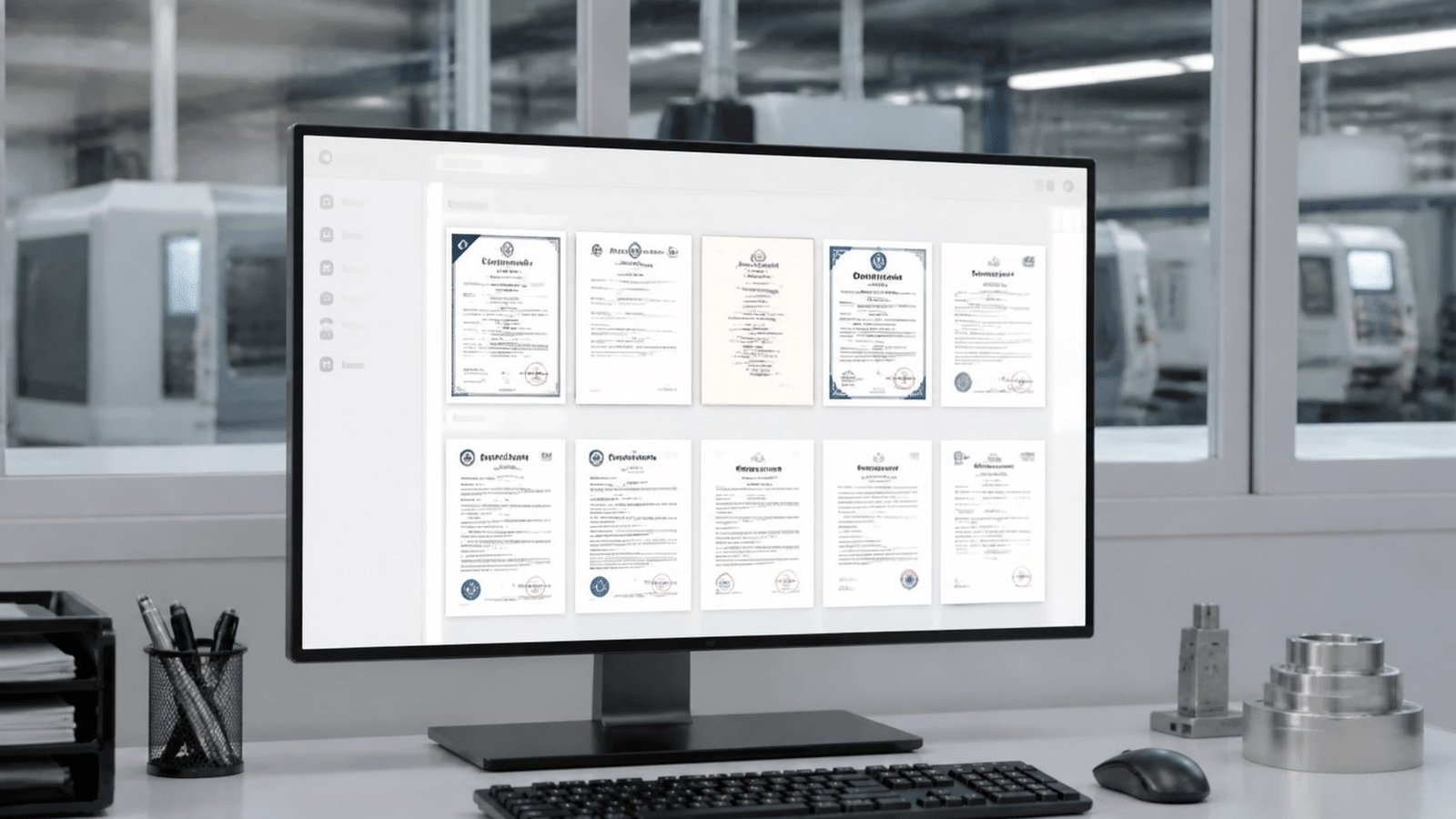
The redesign wasn't cosmetic. It was structural — built specifically around what OEM procurement teams actually look for during supplier qualification.
Here's what changed:
A secure certifications portal: IATF 16949 and ISO certificates were uploaded with full scope details — covering the correct legal entity, the specific manufacturing site, and the production activities included. Certificate numbers, issuing bodies, and expiry dates were all visible. Downloadable PDFs, not just logos.
Process documentation pages: Each major manufacturing process got its own page. Press specifications, tooling capabilities, inspection equipment, SPC implementation, and quality control checkpoints — all written in plain language that a procurement engineer could read and actually use.
A virtual plant tour video: Rather than stock photography, the site featured a short walkthrough of the actual facility. Equipment visible. Floor organized. Team present.
Clear contact routing: Separate inquiry paths for quality questions, capacity discussions, and new program enquiries — so the right person received each message instead of everything landing in a generic inbox.
None of this required inventing anything the supplier didn't already have. The capability was always there. The redesign just made it findable, verifiable, and credible in the 15 minutes a procurement manager has before their next meeting.
The Outcome
The supplier passed the OEM's qualification process. But what stood out in the feedback wasn't just compliance — it was transparency. The OEM's quality team specifically noted that the accessible documentation reduced back-and-forth during the qualification phase. The supplier had answered most of the standard screening questions before anyone had to ask them.
That program turned into a multi-year contract.
And the website didn't stop working after that. The supplier now uses it as a standard part of their approach to new OEM targets — sharing specific pages during initial outreach, directing procurement teams to the certifications portal before first calls, and using the process documentation pages to demonstrate maturity to customers who haven't yet visited the facility.
The site went from being a liability in the audit process to being a core part of the sales toolkit.
That's what industrial website design actually means in practice. Not a prettier homepage. A credibility asset that works while you're on the floor.
Case Study 2: Slashing Quote Turnaround Time for a High-Mix Job Shop
You know that sinking feeling when you work hard on a bid, follow up twice, and then find out the customer already placed the order — with someone else — three days ago?
For a metal fabrication job shop we worked with, that was happening regularly. Not because their work was worse. Not because their prices were out of range. They were losing jobs because they were slow. And the slowness wasn't on the floor. It was in the quoting process.
The Before State: Chaos Before the Job Even Starts
Here's what a typical RFQ looked like for this shop before anything changed.
A buyer sends a WhatsApp message. Sometimes there's a drawing attached. Sometimes there isn't. The MD sees it that evening, after the floor closes. He needs the material grade, the finish spec, the quantity, and the delivery timeline before he can even start costing. So he sends a reply message. The buyer responds the next morning — maybe. Meanwhile, two or three other pieces of information are sitting in different places: one number in Tally, another in an Excel sheet that only one person knows how to navigate, and the rest in someone's memory.
Three to four days later, a quote goes out. Sometimes the buyer has already moved on.
This wasn't a people problem. The shop had experienced estimators and a competent MD. But the process had no structure. RFQs arrived with incomplete information, costing data lived in four different places, and there was no system to capture, track, or prioritize incoming inquiries. Every quote started from scratch.
And research on manufacturing sales benchmarks suggests that companies responding to leads within five minutes achieve a 32% close rate, compared to just 7% for those responding after 24 hours. At three to four days, this shop wasn't even in the game.
The Fix: A Digital Catalogue and a Smart RFQ Form
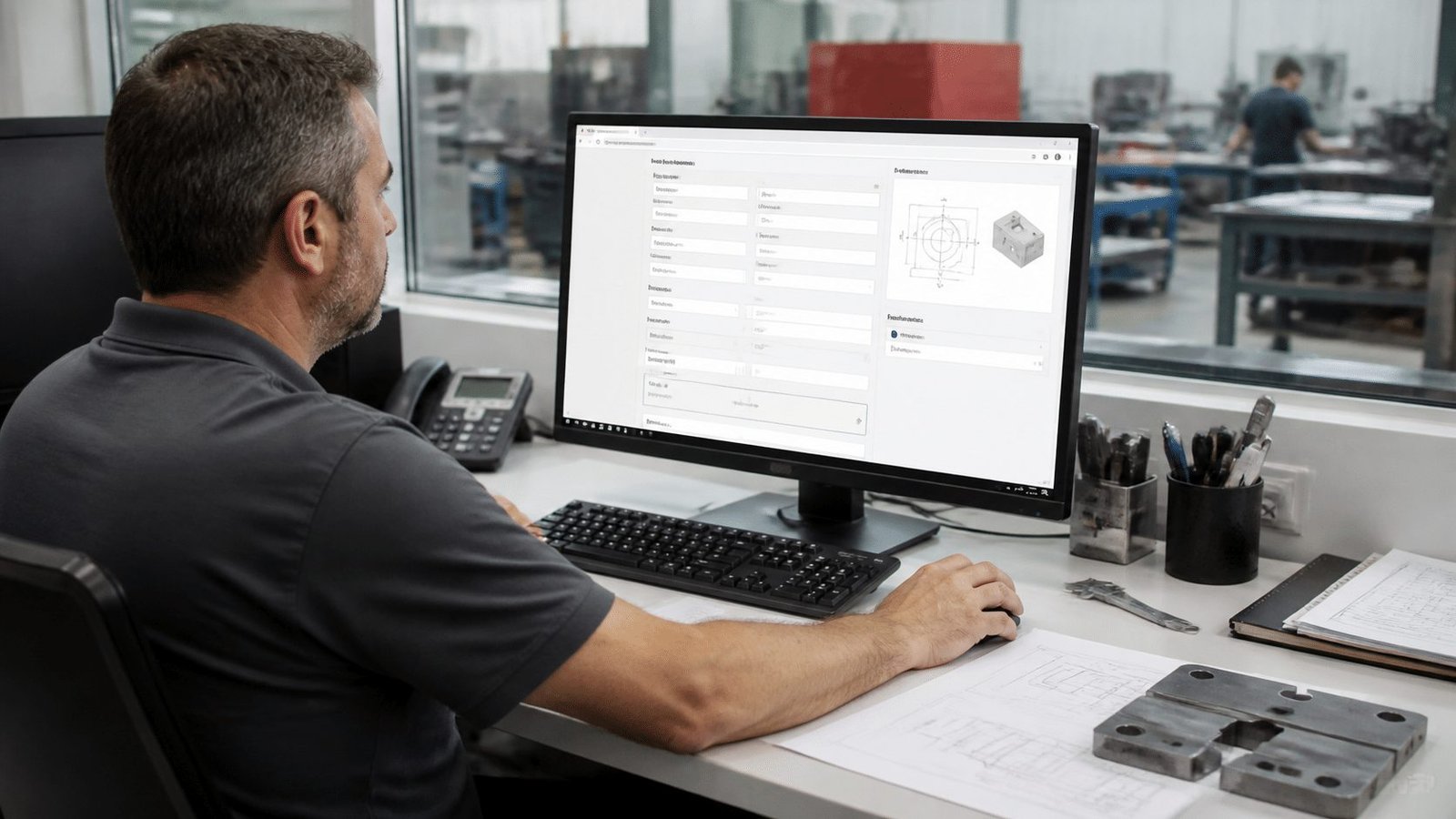
The solution wasn't an overhaul of the shop floor. It was a structural change to the front end of the sales process — specifically, what happened before the estimator ever touched the inquiry.
Two things were built into the website.
First, a digital catalogue organized by process and material. Sheet metal fabrication, structural steel, precision components — each category presented with standard specifications, typical tolerances, surface finish options, and material grades the shop actually worked with. Not a brochure. A functional reference that let buyers understand the shop's capabilities and self-qualify their own requirements before submitting anything.
Second, a smart Request for Quote form that collected everything an estimator actually needs upfront. The form used conditional logic — select a process, and the relevant fields appear. Specify a material, and compatible finish options are shown. Buyers could upload drawings directly. Quantity, required delivery date, and any special requirements were all captured before the inquiry landed in anyone's inbox.
No more back-and-forth to collect basic information. No more half-complete WhatsApp messages sitting unanswered while the MD figured out what was actually being asked.
The incoming RFQ now arrived complete. Or close enough to start costing immediately.
The Result: Faster Quotes, More Wins
Quote turnaround time dropped by over 70%. Jobs that previously took three to four days to price were going out the same day — sometimes within hours of the inquiry landing.
But the speed wasn't even the most interesting part.
The sales team stopped spending their mornings chasing missing specifications and started spending them on follow-ups with real buyers. The estimators worked from complete information. And the MD stopped being the bottleneck in his own sales process.
The 20% increase in won bids from new clients was measurable. But what those clients actually said was more telling. Several cited the quoting process itself as a reason for choosing the shop. "Professional and fast" came up more than once in early conversations. For buyers who were comparing three suppliers, a quote that arrived the same day — organized, complete, and specific — read as a signal about how the whole engagement would go.
That's lead generation for manufacturing done right. Not ads. Not cold outreach. A website that captures the right information, routes it to the right person, and makes the shop look like a serious operation from the very first interaction.
And honestly? That's what a manufacturing company website is supposed to do.## Case Study 3: Unlocking Export Markets with a Targeted Website Strategy
Picture a second-generation owner — maybe 35 years old, technically sharp, has rebuilt the shop floor from scratch — sitting in Dubai across from a procurement manager who's half-listening. The meeting went fine. But afterward, that buyer pulled up the company website on his phone, found a page that looked like it was built in 2014, showed no international projects, no Arabic language option, and no clear sense of whether this supplier had ever shipped outside India.
The deal didn't move forward.
This is the story of an industrial equipment manufacturer who had a real product, real capability, and a real shot at Gulf export markets — but an invisible digital presence that made them look like a domestic-only operation to anyone searching from outside India.
The Before State: Strong on the Floor, Invisible Abroad
The company had been operating for over a decade. Good engineering team. Solid domestic client list. The kind of business that wins on relationships and reputation — within a 200-kilometre radius.
But the second-generation owner had bigger plans. Gulf markets, specifically the UAE and Saudi Arabia, were a real opportunity. Infrastructure spending in the region was growing. Industrial procurement teams there were actively looking for reliable suppliers from India. And the owner knew it.
The problem? Their website was entirely English, not built with international search in mind, and had zero content that would build trust with a buyer in Riyadh or Abu Dhabi. No international case studies. No mention of export capability. No logistics or Incoterms information. No Arabic-language option. Nothing to signal that this company had ever shipped a piece of equipment beyond their home state.
Straits Research estimates the Middle East and Africa B2B e-commerce market at $355.83 billion in 2025, growing at a projected 17.2% CAGR through 2034. Gulf procurement teams are increasingly discovering, comparing, and qualifying suppliers digitally before anyone picks up the phone. If you're not findable and credible in that digital window, you simply don't exist as an option.
That's where this manufacturer was. Operationally ready for export. Digitally invisible to the buyers who would have said yes.
The Strategic Fix: Rebuilding for a Global-First Audience
The redesign wasn't just a translation exercise. It was a rethink of who the website was actually talking to — and what those buyers needed to see before they'd consider reaching out.
Four things changed.
English/Arabic dual-language capability. Core pages — capabilities, certifications, product specifications, and the contact/RFQ section — were built in both languages. This wasn't a Google Translate shortcut. The Arabic content was written for procurement professionals, with the right technical terminology and a layout that respected right-to-left reading patterns.
International project case studies. The site added documented examples of successfully completed export projects — showing equipment specifications, destination markets, logistics handled, and outcomes delivered. These weren't vague references. They answered the exact questions a Gulf buyer would have: Can this supplier actually ship to us? Have they done it before? What did it look like?
Export and logistics transparency. Incoterms options, standard lead times, countries served, freight documentation support, and warranty terms for international buyers were all made visible. Previously, a buyer would have had to email or call just to find out if the company could even serve their market. That friction disappeared.
SEO targeting Gulf commercial keywords. The site was restructured to rank for specific search terms that procurement teams in the UAE and Saudi Arabia were actually using — product-category terms, application-specific searches, and supplier-qualification language in both English and Arabic. Not broad vanity terms. The kind of searches a buyer makes at 11pm when they're putting together a shortlist.
This is what industrial website design looks like when the goal is market expansion, not just a cleaner homepage.
The Result: A New Revenue Stream in 60 Days
The first qualified lead from the Gulf came in within 60 days of the new site going live. Not a cold outreach. Not a trade show contact. An inbound inquiry from a buyer in the UAE who had found the company through organic search, read the Arabic-language capability page, reviewed the export case studies, and decided this supplier was worth contacting.
That inquiry converted into a significant export order — the first of what became a repeatable new revenue stream.
But the bigger shift was strategic. The owner now had a website that positioned the company as a credible international supplier, not just a capable domestic one. When he walked into that next meeting in Dubai, there was something to point to. Something a procurement team could review before and after the conversation. A digital presence that backed up everything he was saying in the room.
For international buyers, the trust signals that matter are specific: current certifications with visible scope, named facilities, export logistics information, documented project history, and contact routes that don't require a buyer to navigate a language barrier just to ask a question. A manufacturer's website review covering 79 companies rated an informative website as the strongest credibility signal, scoring 4.0 out of 5 — ahead of company age, size, or reputation.
A website built for export isn't a luxury for a growing manufacturer. It's the thing that makes growth possible.
How to Choose the Right Partner (Hint: It's Not Just the 'Best Website Design Agency')

Let's be honest for a second.
If you've read this far, you've probably been burned before. A developer who took the deposit and went quiet. An agency that delivered something beautiful that nobody could update. A consultant who built a website that looked great on a laptop in their office and broke on mobile the first time a buyer opened it. Sound familiar?
You're not alone. This is probably the most common thing we hear from manufacturers before they start working with us. And it's why the question "who is the best website design agency for manufacturers?" is actually the wrong question to start with.
The right question is: does this partner understand how I sell?
They Should Ask About Your Sales Process First
Here's a simple test. In your first conversation with any web development company, count how many questions they ask about your business before they start talking about design, technology, or price.
A general digital agency will ask about your brand colors and competitors. A good B2B website development company for manufacturers will ask something like: how does an inquiry currently land with you, and what has to happen before a quote goes out?
That question matters because it reveals whether they're thinking about a manufacturing company website as a sales tool or as a graphic design project. The case studies above weren't built by people who cared about fonts. They were built by people who understood that a procurement manager has 15 minutes and needs to verify an IATF certificate, or that a job shop owner is losing bids because his RFQ process starts with a WhatsApp message at 9pm.
Ask them directly: what do you know about how OEM buyers qualify suppliers? Or: how would you think about reducing our quote turnaround time through the website? If they look blank, walk away.
System Thinking Over Standalone Design
Here's the thing about most failed IT projects in small and midsize manufacturing businesses. The technology itself usually works fine. What fails is the fit — between the system and the actual process, between the new tool and the existing data, between what was promised and what got built.
The right partner thinks in systems, not screens. They ask where your product data lives today. They ask whether your team uses Tally, Excel, a partially-implemented ERP, or some combination of all three. They ask what happens after a lead comes in — who sees it, what they do with it, and where it gets recorded.
This doesn't mean you need a full integration on day one. It means your website partner should know that the integration question exists and have a realistic view of it. A site that generates 20 RFQs a week is worthless if those RFQs land in a generic inbox that three people share and nobody owns.
Full system integration might be Phase 2 or Phase 3. That's fine. But a partner who never thinks to ask is one who'll hand you a website that creates new manual work instead of reducing it.
Demand a Proposal That Connects Features to Business Goals
This is where you can spot the difference fast.
A generic proposal says: we will build an RFQ form. A good proposal says: this structured RFQ intake form will collect material grade, tolerances, quantity, and drawing files upfront — reducing your average quote turnaround from three days to same-day and eliminating the back-and-forth that's currently costing you bids.
See the difference? One is a feature. One is an outcome.
The same logic applies to every line item. "We will do SEO" is not a strategy. "We will target the specific search terms your OEM procurement buyers use when qualifying new suppliers in your product category" is a strategy. "We will add a certifications page" is a checkbox. "We will build a downloadable certifications portal that lets a buyer verify your IATF 16949 scope, issuing body, and expiry date without calling you" is a business case.
If the proposal you receive doesn't connect each feature to a commercial outcome, push back. A 2025 manufacturer marketing survey found that proving ROI was the biggest digital marketing challenge for manufacturers — which means a partner who can't articulate ROI in their own proposal almost certainly can't help you measure it later.
And if they're trying to sell you a proprietary platform you can't leave, or a retainer you can't cancel, those are the specific flags that should send you back to the conversation about vendor lock-in. The right partner gives you ownership of the site, the code, the analytics, and the content — whether or not you continue working with them.
That's not a luxury ask. It's a baseline.
Your Website: Your Hardest-Working Salesperson
Here's a quick test. Open your own website right now — on your phone, the way a buyer would.
Can you find your certifications in under 30 seconds? Does the site look as professional as the competitor who just won your last bid? And does your contact form actually help a buyer send you a detailed RFQ, or does it just say "Name, Email, Message" and leave them guessing?
If any of those answers made you wince, you already know what the problem is.
The three case studies in this article aren't coincidences. They're the same story told three different ways: a manufacturer with real capability, losing real opportunities, because their website wasn't doing its job. The auto component supplier nearly missed an OEM program because a procurement team couldn't verify a certification in 15 minutes. The job shop was losing bids not on quality or price, but on speed — because their quoting process started with a WhatsApp message at 9pm. The equipment manufacturer had a product ready for Gulf export markets and buyers who were actively looking. They just couldn't find each other.
In every case, the fix wasn't cosmetic. It was commercial.
Gartner found that 61% of B2B buyers now prefer a rep-free buying experience — they want to research, compare, and shortlist before they ever speak to sales. That means your website isn't supporting your sales process. It is your sales process, for most of the journey that matters.
So stop looking for the "best website design agency" and start looking for a partner who understands how you actually sell. Someone who asks about your RFQ process before they talk about fonts. Someone who knows what an OEM procurement team looks for during a desk-based screen. Someone who builds for outcomes — faster quotes, more qualified inbound, credibility in new markets — not just a cleaner homepage.
Before you talk to anyone, run this 3-point check on your own site tonight:
Can a buyer verify your certifications in under 30 seconds? Not a logo. The actual certificate, scope, issuing body, and expiry date — downloadable.
Does your site look as credible as the competitor who just won your last bid? Be honest. If the answer is no, that's not a design problem. It's a commercial one.
Does your contact form actively help or quietly discourage a detailed RFQ? If it's a three-field form with no drawing upload, no process selection, and no delivery date field, it's costing you bids.
If you found gaps, that's actually good news. They're fixable. And the manufacturers who fix them — the ones who treat their website as the strategic asset it is — tend to win the bids, pass the audits, and open the markets that everyone else is still trying to get into.
At Cluxn, we work specifically with MSME manufacturers. Not enterprise IT projects scaled down. Not templates rebranded for industry. We build websites and digital systems that fit the way manufacturing businesses actually operate — your quoting process, your certifications, your buyers, your growth goals.
No proprietary platform. No mandatory retainer. You own everything we build, whether or not you continue working with us.
If you'd like an independent review of your current site — what's working, what's losing you bids, and what to fix first — we're happy to run one. No sales pitch. Just a prioritized list of opportunities you can act on, with whoever makes sense for your business.