You know that sinking feeling when a late shipment turns into three phone calls, two spreadsheet checks, and one very annoyed customer? Yeah, manufacturers are living that right now.
Supply chains keep wobbling. Costs keep climbing. And the pressure to go digital is getting louder by the week. In 2024, global disruption events rose 38% year over year, and manufacturing firms have been losing around $0.61 million per disruption day. That's not pocket change. That's a factory-sized headache.
The old way of running things just doesn't hold up anymore. If your team is still leaning on patchy tools, manual updates, and a legacy ERP that nobody fully trusts, you're probably feeling the drag already. The best ERP software for manufacturing industry setups do more than track jobs. They connect people, machines, stock, and customers in one place.
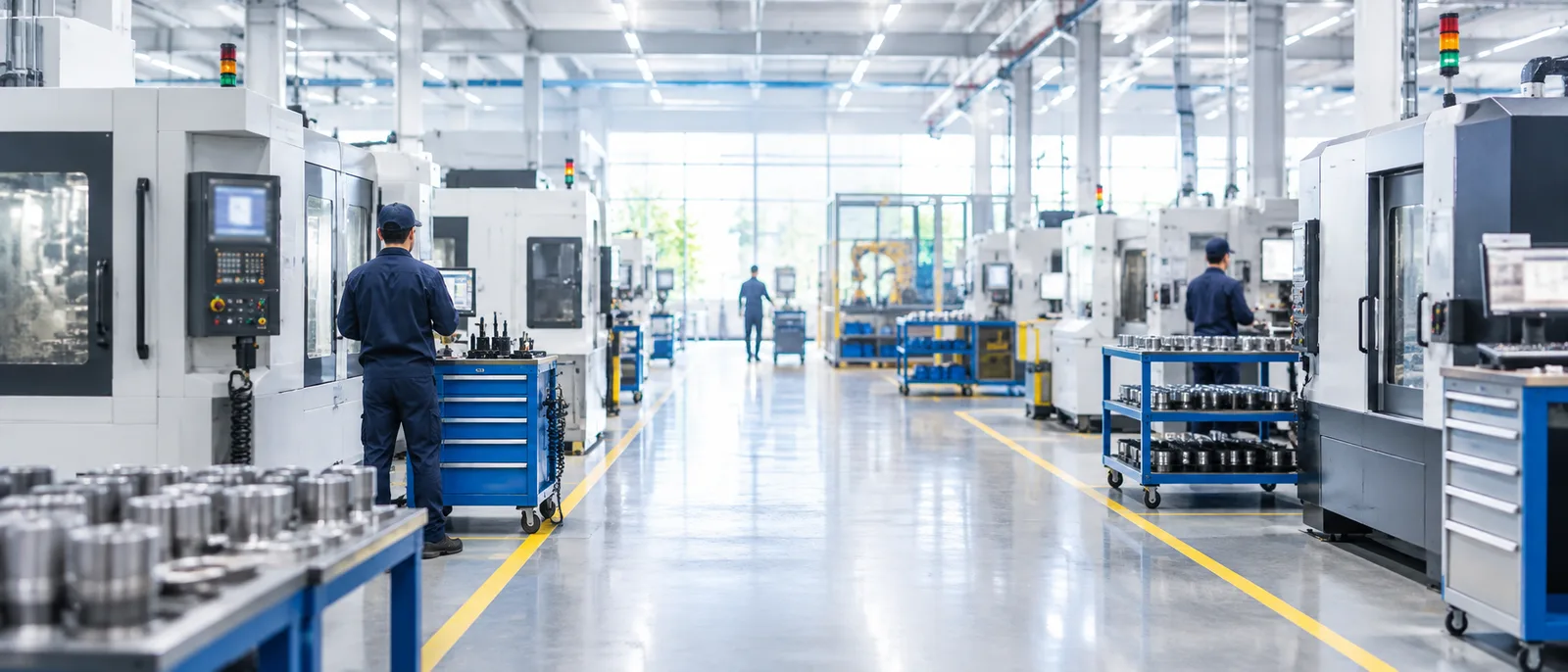
And that's really the shift here. Modern manufacturing ERP solutions are not just record-keeping tools. They help with faster planning, better visibility, and fewer ugly surprises on the shop floor.
Here’s what’s coming next in this article:
Trend | Why it matters |
|---|---|
AI in manufacturing ERP | Better forecasts, fewer breakdowns, smarter decisions |
Cloud ERP for manufacturers | Easier access, faster updates, less IT stress |
IIoT integration ERP | Real-time machine data and shop-floor visibility |
Smart factory ERP | Cleaner workflows and tighter production control |
Next-generation ERP | Built for change, growth, and faster response times |
Actually, wait - there’s a better way to think about it. The question is not whether ERP is part of manufacturing anymore. It’s whether your ERP can keep up with how you work now, and how you’ll need to work next year.
For MSME manufacturers, that matters a lot. Whether you run an auto components unit in India, a packaging line in the UAE, or a metal job shop in the UK, the right system can cut chaos and give you room to grow. Cluxn works with manufacturers like that, building ERP and workflow setups that fit the plant instead of forcing the plant to fit the software.
So let’s look at the five ERP trends shaping the future of manufacturing. A few may surprise you. A few may already be knocking on your door.
1. The Rise of Composable and Cloud-Native ERP Architectures
A lot of factories still run on old ERP setups that feel like they were built for another century. One box for everything. One giant system. One big headache when you need a small change.
And that old model is getting harder to defend. Cloud ERP for manufacturers is growing fast, and the move is pretty easy to spot. As one recent market roundup shows, cloud ERP now has about 70% market share, while on-premise still sits around 30% manufacturing ERP market share trends. That shift says a lot. Manufacturers want systems that can bend a little without breaking.
That’s where composable ERP comes in. Think of it like building with blocks instead of pouring one giant slab of cement. You can pick the parts you need, like production planning, inventory, quality checks, or finance, and swap in new tools later without ripping out the whole setup. Nice, right?
For the ERP software for manufacturing industry, this matters for a few big reasons:
Benefit | What it looks like on the factory floor |
|---|---|
Scalability | Handle busy seasons, new lines, or sudden order spikes without panic |
Agility | Add new tech like AI in manufacturing ERP or IoT integration ERP faster |
Lower TCO | Less server upkeep, fewer patch nights, and no room full of hardware |
Better fit | Use only the modules you need, not ten you never touch |
You know what else? Cloud-native systems open the door to business model changes. A plant can move toward manufacturing-as-a-service, which is just a fancy way of saying you can offer more flexible production and faster turnaround without rebuilding your whole IT stack. That’s a big deal for MSMEs trying to look and act bigger than their size.
But there’s a trust question too. Many owners worry about security, and fair enough. With cloud ERP, the vendor handles the infrastructure, patching, backups, and data center security, while your team manages access and user roles. So the load gets shared instead of dumped on one tired IT person who’s already juggling five other things.
For growing shops in India, the Gulf, the UK, or North America, this shift can be the difference between staying stuck and moving cleanly into the future of ERP systems. And if you’re still on a patchwork setup of Excel, WhatsApp, and old servers, this is probably the first place to look.
Cluxn helps MSME manufacturers move into cloud-native ERP and workflow setups without forcing a painful rip-and-replace. If your team wants less chaos and more room to grow, this is a smart place to start.
2. AI and Machine Learning: From Reactive to Predictive Operations
You know that awful moment when a machine goes quiet at 2:17 pm, and nobody saw it coming? Then the line slips. Orders stack up. Someone starts calling suppliers. Someone else starts blaming the last shift. Ugly stuff.
That’s where AI in manufacturing ERP starts pulling its weight. Instead of waiting for problems to show up, modern manufacturing ERP solutions can look at old jobs, live shop-floor data, and even market signals to spot trouble earlier. Not magic. Just smarter software.
For example, AI-driven demand forecasting can study past sales, seasonality, customer buying habits, and market shifts to help teams plan better. So if your packaging orders always spike before Diwali, or your auto parts demand climbs when a new model launch hits, the system can flag that pattern before your team is stuck scrambling.
And predictive maintenance is a big one. AI can watch machine data and send alerts before a breakdown turns into lost output. Research shows AI-powered maintenance can cut unplanned downtime by 30% to 50%, which matters a lot when one hour of downtime can cost manufacturers around $260,000 predictive maintenance research summary. That’s not a small savings. That’s the kind of number that gets an MD’s attention fast.
Here’s what this looks like inside the ERP software for manufacturing industry:
AI use case | What it does | Why it helps |
|---|---|---|
Demand forecasting | Studies history, market trends, and order patterns | Better material planning, fewer stock-outs |
Predictive maintenance | Spots warning signs in machine data | Less downtime, fewer emergency repairs |
Smart scheduling | Reorders jobs in real time | Better throughput and less waiting around |
Quality checks | Flags defects and odd patterns early | Less scrap, fewer customer complaints |
This is the shift from reactive to predictive. Reactive means fixing messes after they happen. Predictive means catching them before they become a problem. And in a factory, that difference shows up in OEE, or Overall Equipment Effectiveness, pretty quickly. Less stoppage. Better output. Fewer “why is this late again?” meetings.
Actually, wait, there’s more to it. AI also helps with production schedules. If a rush order lands at 4 pm and one machine is already showing signs of strain, machine learning can help reshuffle the day in seconds instead of forcing someone to juggle spreadsheets and guesswork. Humans can do this too, of course, but not at that speed.
That’s why next-generation ERP is moving this way. It doesn’t just store data. It starts helping you decide. For MSME manufacturers, that can mean fewer surprises, tighter control, and a much calmer plant floor.
If your team is still chasing problems after they happen, Cluxn can help you build ERP and automation setups that bring AI into the way you already work. No giant reinvention. Just less chaos and more control.
3. The Connected Factory: IIoT and Digital Twin Integration
You know that moment when the line looks fine from the office, but the floor tells a different story? Someone says stock is ready. Someone else says it’s stuck in receiving. And the machine? It’s quietly doing its own thing. Not ideal.
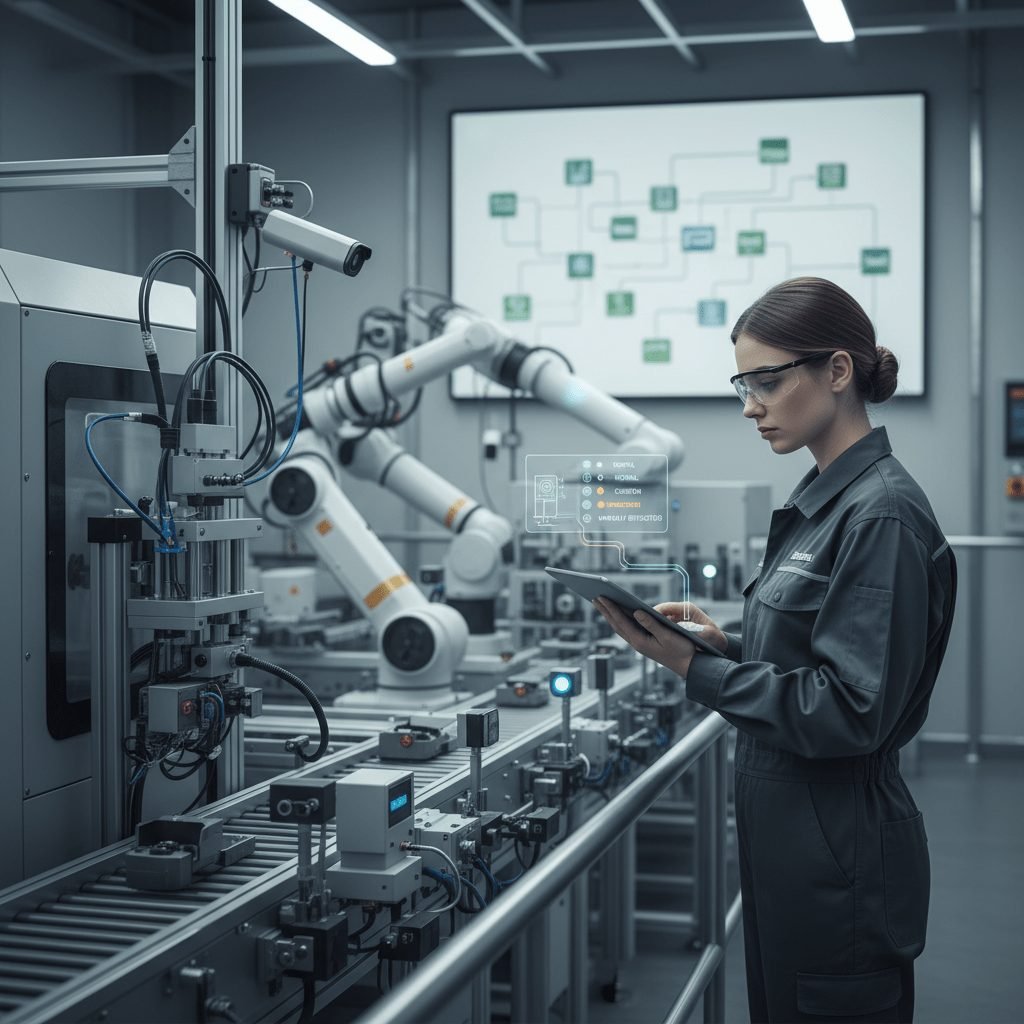
That’s exactly why IIoT integration ERP is getting so much attention. The Industrial Internet of Things, or IIoT, means sensors on machines, trucks, bins, and even pallets send live data back to your ERP. So instead of waiting for a manual update, the system already knows what’s happening. That means less guesswork and fewer “I thought you had it” moments.
For the ERP software for the manufacturing industry, this changes a lot. A connected setup can track machine runtime, temperature, cycle counts, movement of raw material, and finished goods in real time. Then the ERP turns that stream of data into something usable for planners, store teams, and managers.
Here’s a simple look at it:
IIoT data source | What ERP gets | What you can do |
|---|---|---|
Machine sensors | Run time, stops, errors | Spot breakdown risk early |
Warehouse tags | Stock movement | Track inventory live |
Vehicle trackers | Dispatch status | See where material is now |
Line counters | Output numbers | Compare actual vs planned |
And then there’s the digital twin. Fancy name. Simple idea. A digital twin is a virtual copy of a real machine, line, or process. It stays updated with IIoT data inside the ERP, so you can test changes without touching the real floor. Want to try a new shift pattern? Or stress test a line before a big order? You can do that first in the twin.
That matters because factories do not have spare time for blind experiments. A digital twin helps you simulate, check bottlenecks, and tweak production flow before you make a mess on the actual line. Kind of like rehearing before the school play, except the stakes are much higher and nobody gets to forget their lines.
The practical wins are pretty clear:
Automated data capture cuts manual entry errors
Real-time inventory tracking shows stock from store to production
Managers get better shop floor visibility without walking around all day
Production issues show up sooner, not after dispatch gets angry
Teams can plan around actual output, not old spreadsheet guesses
Also, this is where smart factory ERP starts to feel real. Machines, materials, and people stop acting like separate islands. They start talking to each other. Weirdly enough, that’s what makes the whole plant calmer.
If you’ve ever had to chase a supervisor, then call stores, then ask finance, then check WhatsApp messages just to find one job status... you already know why this matters. The future of ERP systems is not just about storing records. It’s about giving you live truth.
Cluxn helps MSME manufacturers build connected workflows that tie ERP, shop-floor data, and reporting together without making the team hate the new system. If your plant still runs on paper notes and end-of-shift updates, this is a strong place to start.
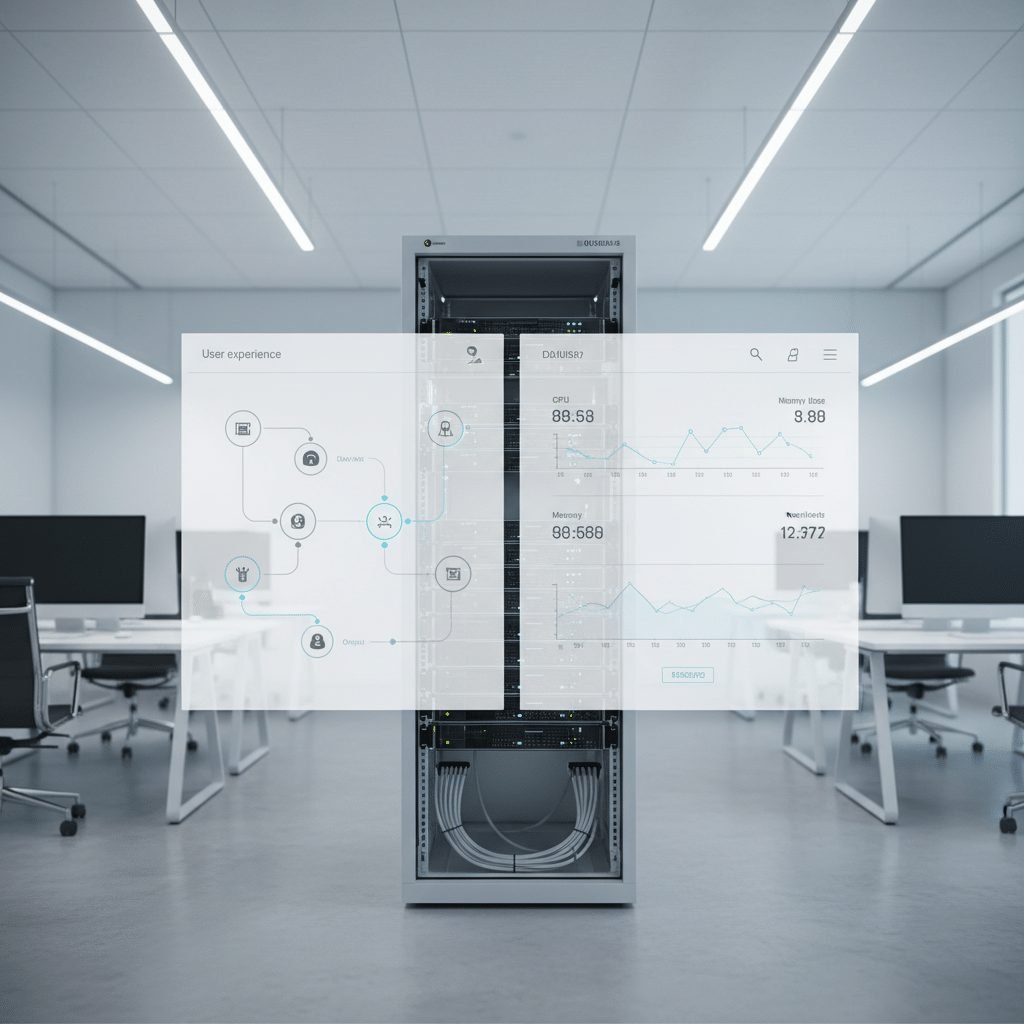
4. Hyper-Personalization of the User Experience (UX)
Ever opened software and thought, “Who built this for?” Yeah, a lot of factory teams feel that way the first week. Legacy ERP screens are often clunky. Too many fields. Too many menus. Too much clicking. And for the shop floor, that means more delays and more mistakes. In fact, studies on ERP usability show that easier interfaces can lift adoption, cut training time, and reduce errors, while role-based views help people do their jobs faster (UX and ERP adoption research).
That’s why the ERP software for manufacturing industry is changing fast. Modern systems don’t give everyone the same messy screen. They give each person what they need, and not much else.
User | What they see | Why it helps |
|---|---|---|
CFO | Cash flow, margins, invoice status, and financial KPIs | Faster decisions, fewer surprises |
Plant manager | Output, downtime, bottlenecks, and order progress | Better control of daily production |
Warehouse worker | Picking lists, packing tasks, and stock alerts | Less confusion, fewer wrong moves |
MD / promoter | Cross-plant summary, exceptions, and approvals | Quick checks from anywhere |
And the best part? All of it can come from one single source of truth. So the finance team, the plant team, and the warehouse team aren’t arguing over whose spreadsheet is right. Nice change, honestly.
Mobile access is a big piece too. Managers can check reports on a phone, approve orders from a tablet, or watch production while they’re on the shop floor or stuck in traffic on the way to a client meeting. That matters for MSME manufacturers where the person signing off on a job is often wearing three hats before lunch.
Actually, wait. This isn’t just about comfort. It changes adoption. If the ERP feels simple, people use it. If it feels like punishment, they find workarounds. And then you’re back to WhatsApp, paper notes, and “I thought someone else updated it.”
For growing plants, smart factory ERP, cloud ERP for manufacturers, and next-generation ERP all point in the same direction: software that fits the person, not the other way around. Cluxn helps MSME manufacturers set up ERP screens, approvals, and mobile workflows that match how the factory really works, so teams spend less time fighting the system and more time getting jobs out the door.
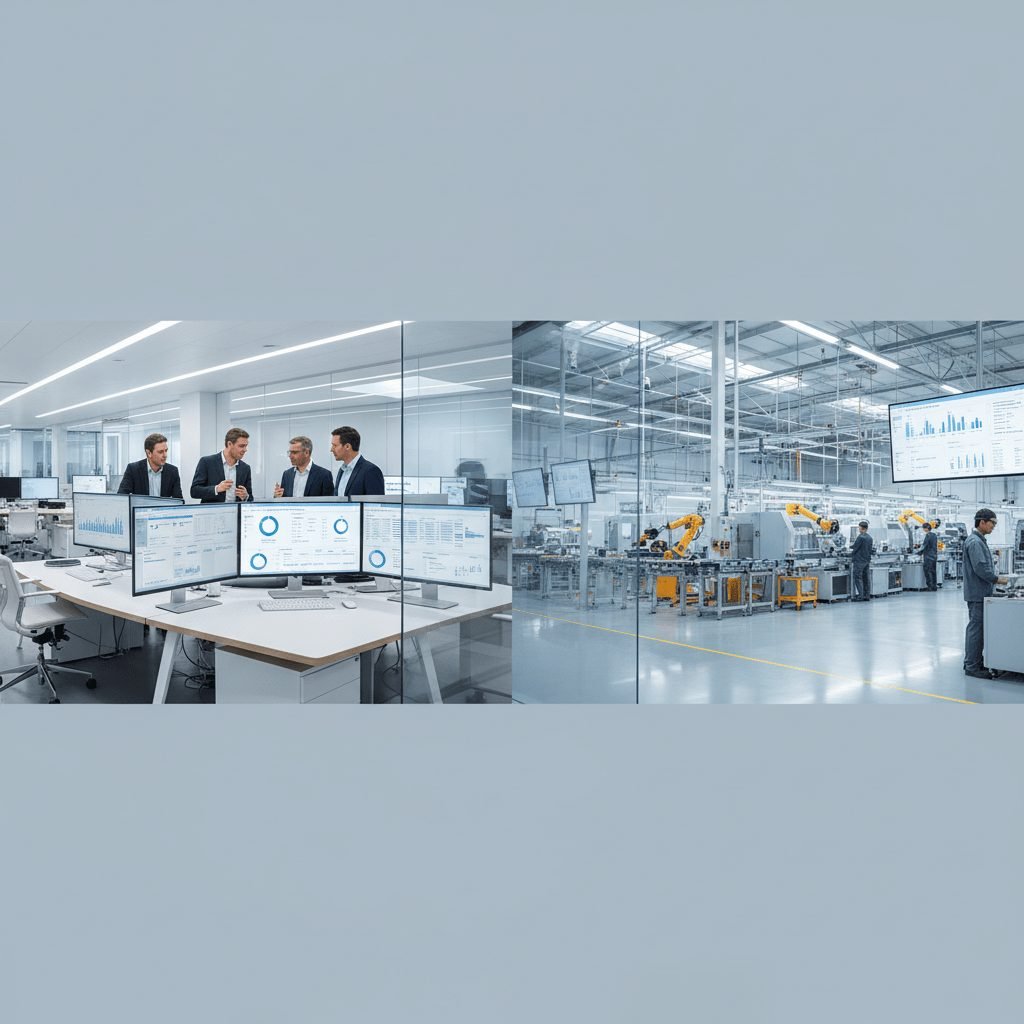
5. Building Resilient and Transparent Supply Chains
Ever had a supplier promise raw material “by Friday,” then Friday turns into Monday, and Monday somehow becomes next week? Yep. That little delay can hit production, shipping, and cash flow all at once.
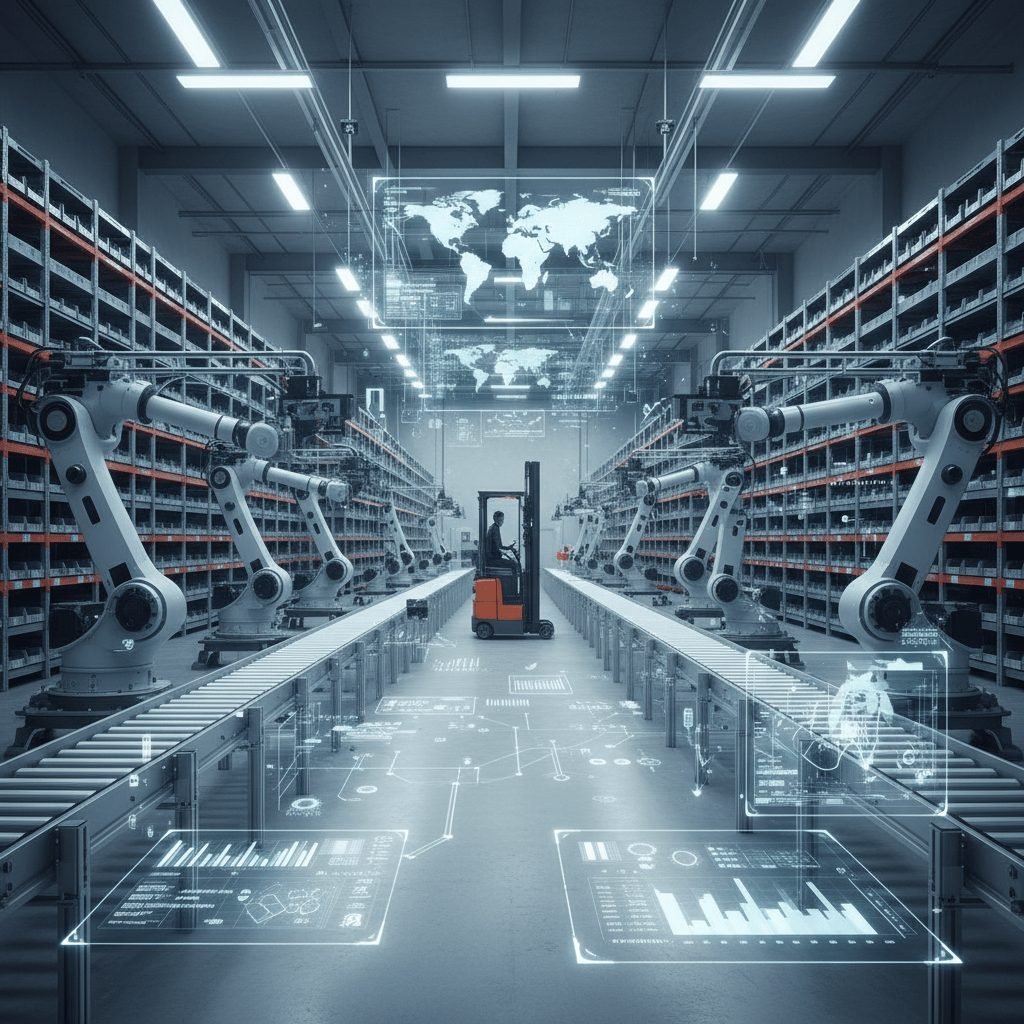
That’s why next-generation ERP is moving past the factory gate. It’s no longer just about what’s happening on the shop floor. It’s about the full path from supplier to shipment, so you can see trouble before it turns into a mess. And the timing matters. Supply chain disruption events rose 38% year over year in 2024, and manufacturers are losing about $0.61 million per disruption day supply chain disruption cost data. Ouch.
Modern manufacturing ERP solutions now bring in tools like supplier collaboration portals, live shipment tracking, and risk alerts. So if a port backs up, a storm hits a route, or a vendor misses a handoff, the system can flag it early. No more finding out after the customer already did. That’s the worst kind of surprise.
Here’s what that looks like in plain terms:
Supply chain feature | What it does | Why it helps |
|---|---|---|
Supplier portal | Shares forecasts, POs, and updates in one place | Fewer email chains and less confusion |
Shipment tracking | Shows where material is right now | Better delivery planning |
Risk alerts | Flags weather, port delays, or late vendors | Faster backup plans |
Traceability tools | Tracks raw material and parts by batch | Easier audits and recalls |
This is also where sustainability and compliance start to feel real instead of like paperwork nobody enjoys. If you need to prove where a raw material came from, or which batch went into a finished good, better traceability makes that much easier. That matters in food, pharma, textiles, and auto parts, where customers and regulators both want clean records.
And there’s another angle. Supply chain visibility is a big deal for buyers now, especially after the pandemic pushed companies to rethink how fragile their setups were. A lot of manufacturers are still stuck with on-premise ERP, which means the data is trapped in silos and the people across the chain can’t see the same truth. Cloud ERP for manufacturers changes that by opening up access across teams, sites, and even suppliers.
Actually, wait. The best part might be this: resilient supply chains are not just about speed. They’re about calm. When your team can see risk early, work with vendors faster, and track material from start to finish, you spend less time chasing problems and more time running the business.
For MSME manufacturers, that can mean fewer stock surprises, better on-time delivery, and less stress during audits. And if your current setup still depends on WhatsApp updates, phone calls, and a few heroic people who “just know where everything is,” it’s probably time to look at a smarter setup.
Cluxn helps MSME manufacturers build ERP and workflow systems that connect suppliers, stock, production, and dispatch in one view. If you want better traceability, clearer reporting, and less last-minute panic, this is the kind of upgrade that pays off.

How to Prepare for the Future of Manufacturing ERP
So, where does this leave us? Pretty clear, actually. The future of manufacturing ERP is already showing its shape. Cloud and composable systems give you room to grow. AI in manufacturing ERP helps you spot trouble before it gets ugly. IIoT integration ERP brings live shop-floor truth into one place. Better UX gets your team using the system. And supply chain tools help you see risk early instead of finding out the hard way.
Put all that together, and you get something close to a smart factory. Not shiny for the sake of it. Just calmer, faster, and easier to run. If you're a manufacturing leader, here's a simple way to move forward:
Audit your current setup.
Look at where your ERP works and where it breaks. Check for duplicate entry, missing visibility, late reports, and workarounds that have become part of the process.
Write down your future goals.
Do you want faster quotes, better traceability, less downtime, or cleaner audits? Be plain about it. The system should support where you want the business to go.
Build a cross-functional team.
Bring in the promoter, plant head, finance, and a few people who actually use the software. If only one person decides, you usually get blind spots.
Pick vendors who fit the next five years.
Look for cloud ERP for manufacturers, strong mobile access, good workflows, AI-ready tools, and real support for shop-floor data. Don’t get distracted by flashy demos that can’t handle daily work.
And here’s the part most people feel in their gut: modern manufacturing ERP is not just a software spend. It’s the base layer for better decisions, steadier growth, and fewer late-night fire drills. With disruption costs still high and factory pressure rising, waiting too long can get expensive fast supply chain disruption cost data.
If you want a system that fits your plant instead of fighting it, Cluxn can help you build the right setup for your team. The sooner you start, the sooner ERP stops being a headache and starts being a real edge.