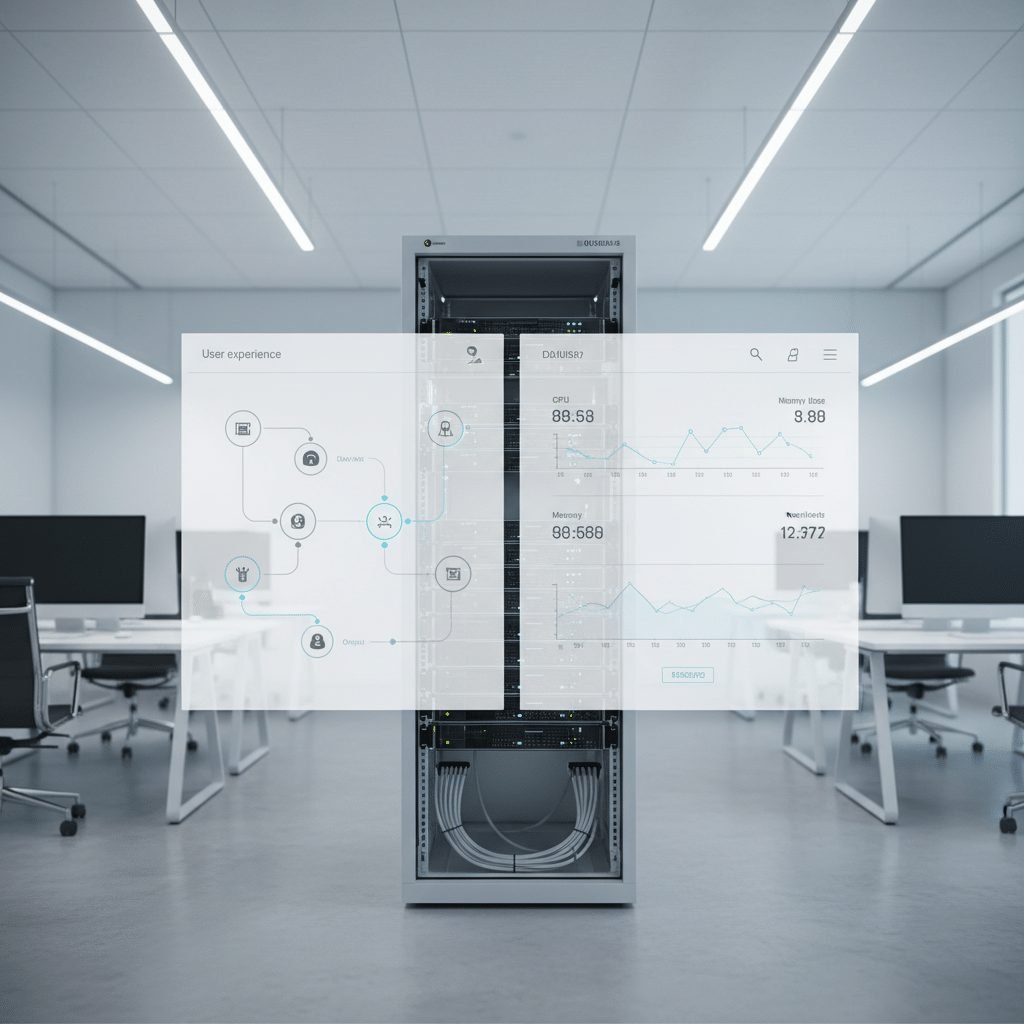

Ever had three people give you three different answers from the same factory? One says the order is on track. Another says it’s delayed. The third says, “I’ll check WhatsApp.” That mess is more common than we like to admit.
A lot of businesses still run on split-up data and half-guesses. In one industry note shared from Forrester, only 48% of business decisions use data and analysis, which means the rest are still made without it. That’s a lot of room for error, slow calls, and plain old stress.
This is where advanced business systems start to matter. When ERP, CRM, and business intelligence systems work together, you stop guessing and start seeing what’s really happening. That’s the big shift: from reacting after the damage is done to acting early, with clarity.
And here’s the real point.
Data analytics is not just for fancy reports. It helps with optimizing business processes with data, spotting customer patterns, and building a stronger enterprise data strategy. For MSME manufacturers, that can mean fewer stock-outs, cleaner costing, faster quotes, and less floor-walking just to check order status.
In this article, we’ll map out how integrated business software and data analytics can help you advance business systems in a practical way. We’ll look at what good business system integration looks like, how modern business management systems create visibility, and why even one clean dashboard can save hours every week. If your team is still jumping between Excel, Tally, and WhatsApp, you’re in the right place.
1. Defining Advanced Business Systems: The Foundation for Insight
Picture this. Your plant head checks one screen, your sales team checks another, and finance is still asking for an Excel file from last Friday. Same business. Three stories. One headache.
That’s what old, disconnected systems feel like. Advanced business systems are the opposite. They bring your core work into one connected setup, with one database, shared data, and updates that happen in real time. So instead of chasing the truth, you can actually see it.
Think of it like a modern car dashboard. Speed, fuel, engine health, maps... all talking to each other. If one light flashes, you know what’s wrong fast. But if each gauge lived in its own little box and never shared info? Total mess. That’s what legacy tools and scattered spreadsheets do. They hide the full picture.
Advanced business systems usually include three big pieces:
ERP (Enterprise Resource Planning): tracks orders, stock, production, purchases, and accounts
CRM (Customer Relationship Management): keeps sales leads, customer talks, follow-ups, and order history in one place
SCM (Supply Chain Management): helps manage vendors, materials, movement, and delivery timing
When these work together, you get business system integration instead of data silos. And that matters a lot. A recent industry note shared from Forrester said only 48% of business decisions are made using data and analysis, which means the rest still lean on guesswork and memory. That’s not a small gap. That’s a giant crack in the floor.
For MSME manufacturers, this is where the role of data analytics starts to show up in daily life. You can move from “I think we have enough stock” to “I know exactly what’s in the bin.” You can go from chasing quotes across WhatsApp to seeing customer history, pricing, and pending approvals in one place.
That’s the value of modern business management systems. Clean data. Faster calls. Less drama. And yes, the setup matters.
Legacy on-premise systems tend to be tied to one office, one machine, and a lot of manual upkeep. Modern cloud ERP systems are easier to access, update, and connect with other tools. Plus, they usually fit better with integrated business software like BI dashboards and CRM data analysis tools.
Here's the simple test: if your team has to ask three people and open four files just to answer one question, your system is still too broken up. If one screen gives the answer, you're on the right track.

That’s what it means to advance business systems. Not more software for the sake of it. Just a cleaner way to run the business. If you’re thinking, “OK, this sounds nice, but where do we even start?” — fair question. We’ll get into that next.
2. The Engine Room: How Data Analytics Integrates with Your Business Systems
You know that one friend who always says, “I’ve got the file somewhere”? Business systems can feel like that. The data is there... just not in one place, and never right when you need it.
That’s why people talk about a single source of truth. Fancy phrase, simple idea. It means everyone looks at the same clean data, so sales, production, and finance stop arguing over whose number is right. One version. One set of facts. Much less drama.
Here’s how it usually works in real life:
Data gets created in your ERP, CRM, or shop floor system.
ETL happens. That stands for extract, transform, and load. In plain English, the data gets pulled out, cleaned up, and moved into a data warehouse.
BI tools connect to that warehouse and turn the data into reports, charts, and dashboards.
That warehouse part matters. It’s like a tidy storeroom for cleaned-up data. Not a junk pile. Then tools like Power BI, Tableau, or Looker read from it and show trends fast. So instead of asking three people for one number, you open one dashboard and get the answer. And yes, APIs help a lot here.
Think of APIs as bridges. They let your ERP, CRM, and other tools talk to each other without endless manual entry. No bridge? Then every system stays on its own island. That’s where duplicate entries, missed updates, and bad handoffs creep in.

The real win is this: your integrated business software stops acting like separate parts and starts working like one team. That’s the role of data analytics in advanced business systems. Not just reporting what happened, but helping you spot what’s changing before it turns into a mess.
For MSME manufacturers, that can mean cleaner order tracking, better ERP analytics, smarter CRM data analysis, and faster calls on stock or delivery timing. Cluxn helps manufacturers set up that kind of flow without piling on extra complexity. If your current setup still lives in Excel, Tally, and WhatsApp, it might be time to connect the dots.
Explore Cluxn’s ERP, automation, and workflow support for manufacturing teams
3. From Data to Action: Key Roles of Analytics in Business Operations
You know that moment when the sales team says demand is “looking strong,” but the shop floor is already packed with WIP and the next truck is late? Yeah. That gap hurts. Data analytics helps close that gap. It turns noisy info into better calls. Not perfect calls. Just better ones, which is already a big win.
1) Strategic decision-making: from “what happened” to “what should we do?”
The first step is simple. Look back. That’s descriptive analytics. It tells you what happened last week, last month, or last quarter. For example, you might see that one product line missed its delivery target 6 times in 8 weeks. Or that one client always orders on Tuesdays and cancels on Fridays. Handy stuff.
Then comes predictive analytics. This is where your ERP analytics and business intelligence systems start to spot what’s likely next. If orders usually rise before festival season, or if a customer’s buying pattern is slipping, the system can flag it early. So instead of saying, “Oh no, we’re short again,” you can prepare before the panic starts.
And then there’s prescriptive analytics. This is the part people get excited about. It doesn’t just say what may happen. It suggests what to do next. Reorder this material now. Shift that job to the other line. Push this quote before price changes hit. It’s like having a calmer, faster ops brain in the background.
For MSME manufacturers, this can be the difference between reacting late and staying one step ahead. A cleaner enterprise data strategy helps leaders make calls based on facts, not gut feel alone. Actually, wait. Gut feel still matters. But now it gets backup.
2) Optimizing the supply chain without the daily fire drills
Supply chains get messy fast. One delay in raw material, and suddenly production, dispatch, and customer calls all start piling up. That’s where SCM analytics helps. It looks at past demand, current inventory, vendor lead times, and shipment patterns to give a clearer view of what’s coming. If your buying team always orders too early, cash gets stuck. If they order too late, you get stock-outs. Neither one feels great.
Here’s the practical part:
Analytics use | What it helps with | Plain result |
|---|---|---|
Demand forecasting | Predicts likely future orders | Fewer stock-outs and less overbuying |
Inventory planning | Tracks stock levels and reorder points | Lower carrying cost |
Logistics tracking | Watches delivery routes and timing | Fewer bottlenecks |
Supplier patterns | Compares vendor speed and delays | Better purchase decisions |
Predictive supply chain analytics can cut forecast error by 20% to 50%, and even a 15% bump in forecast accuracy can lift pre-tax profit by about 3% predictive analytics supply chain insights. That’s not small. That’s the kind of number a promoter notices.
Prescriptive analytics goes one step further. It can recommend reorder quantities, shipping plans, or labor schedules. For example, if a metal fabrication unit has two urgent orders and one machine is due for maintenance, the system can suggest the best sequence instead of forcing the plant head to guess at 9:30 pm.
3) Personalizing the customer journey with CRM data analysis
This part often gets ignored in manufacturing. Which is odd, because customers are still customers. CRM data analysis helps you see who buys often, who buys once, and who is quietly drifting away. It also helps with customer segmentation, so you’re not sending the same message to everyone. A repeat OEM buyer and a one-time inquiry from WhatsApp should not get treated the same.
Pretty obvious. But a lot of teams still do it. You can also use CRM data to predict churn. If a customer starts delaying replies, changing specs often, or asking for more discounts than usual, that’s a warning sign. Maybe they’re shopping around.
Maybe they’re unhappy. Either way, you’d rather know early. And then there’s CLV, or Customer Lifetime Value. Simple idea. Which customer brings the most value over time? Not just the biggest order this week, but the one who keeps coming back. That helps you focus marketing time where it pays off most.
This is where integrated business software really starts to feel useful. Sales, service, production, and finance all look at the same customer picture. No more half-memories. No more “I think they said yes.” Cluxn helps MSME manufacturers connect ERP, CRM, and workflow tools so this kind of visibility is easier to use in day-to-day work. If your team is still moving between Excel, Tally, and WhatsApp, a cleaner setup can save a lot of time.
And a lot of stress, too. The best part? You don’t need to fix everything at once. Start with one dashboard, one process, or one customer list. Then build from there.
4. Real-World Impact: Case Studies of Analytics-Powered Systems
You know that moment when a factory says, “We’re fine,” and then three days later everyone is hunting for missing stock? Yeah. Been there, seen that. It’s usually not a people problem. It’s a data problem. Let’s look at two real-world style examples that show how data analytics can help advance business systems in a very plain, practical way.
Case Study 1: Manufacturing firm cuts stock-outs and inventory waste
Challenge:
A mid-sized manufacturing and retail distributor was juggling ERP, SCM, and spreadsheet data in different places. The team kept running into stock-outs on fast-moving items, while slow movers piled up in the store. Purchasing was guessing. Finance was unhappy. And the plant team kept getting blamed for delays they couldn’t fully see.
Solution:
The company linked ERP and SCM data into one business intelligence system using a cloud dashboard. That gave the ops team one view of stock levels, reorder points, and vendor lead times. They also set alerts for low stock and slow-moving items, so people didn’t have to wait for weekly reports to spot trouble.
Result:
Within a few months, the business reduced inventory-related costs by about 15% and improved stock availability on top-selling items. Better still, the team spent less time chasing numbers across Excel and more time fixing real issues. That’s the kind of shift that helps a company advance business systems without making daily work harder.
And the funny part? Once people trust the numbers, they stop arguing about them so much. Nice bonus.
Case Study 2: SaaS company improves retention with CRM analytics
Challenge:
A professional services and SaaS business had plenty of customer data, but it wasn’t doing much. Sales knew who signed up. Support knew who complained. But nobody had a clean view of which customers were drifting away. So churn came as a surprise too often.
Solution:
The company used CRM data analysis to look for warning signs. Things like fewer logins, delayed replies, support tickets piling up, and lower renewal activity. Then they built a simple retention campaign. The team reached out early, offered help, and gave at-risk customers a human follow-up before renewal time.
Result:
Customer retention improved by about 10% over the next cycle. Not flashy. But very real. And in recurring revenue, even a small lift can make a big difference over a year.
Here’s the deal: the role of data analytics is not just to make charts look neat. It helps teams act faster, spot risk sooner, and stop losing money to problems they could’ve seen coming.
Business type | Problem | Analytics move | Result |
|---|---|---|---|
Manufacturing and retail | Stock-outs and excess inventory | ERP + SCM dashboard | About 15% lower inventory-related cost |
SaaS and services | Customers at risk of churning | CRM data analysis and follow-up campaign | About 10% better retention |
Both examples point to the same thing. When integrated business software talks to your analytics tools, you get better visibility and calmer decisions. And for MSME manufacturers, that usually means fewer surprises, faster action, and less midnight firefighting.
If your team still lives in Excel, Tally, and WhatsApp, this is a good place to start. Cluxn works with manufacturers to connect ERP, automation, and workflow tools so the business gets cleaner visibility without adding chaos.
5. Your Roadmap: How to Implement a Data-Driven Strategy
You don’t need a giant software budget to get started. You need a clear first step. That’s the part most teams skip, then wonder why the whole thing feels messy.
Step 1: Check your data maturity
Be honest here. Is your data all over the place? Are people still fixing numbers in Excel before meetings? Do sales, production, and finance use different versions of the truth? A simple way to check is to look at three things:
Area | Ask yourself |
|---|---|
Data quality | Are names, stock counts, and order details clean and same everywhere? |
System setup | Do ERP, CRM, and reports talk to each other? |
Team skills | Can your team read dashboards and use the numbers in daily work? |
Most companies start in an ad hoc stage, where data lives in silos and decisions feel reactive. The good news? You can move forward one step at a time. Even a small move toward cleaner data helps you advance business systems without turning the factory upside down.
Step 2: Pick the right tools
This is where a lot of people get stuck. Should you use the analytics inside your ERP or CRM, or buy a separate BI tool like Power BI, Tableau, or Looker? Here’s the short version:
Native analytics in ERP/CRM: good for quick setup and simple reporting
Third-party BI tools: better for deeper dashboards, cross-system views, and more flexible reports
If your team only needs a few standard reports, the built-in tools might be enough. But if you want business system integration across sales, production, finance, and stock, a dedicated BI layer usually gives you more room to grow. That said, more tools is not always better. Funny enough, mid-sized companies often use lots of apps but only a few each day, which is exactly why integration matters so much.
Step 3: Build a data-literate culture
Tools won’t save you by themselves. People have to use them. Start small:
Train teams on reading charts and simple KPIs
Tie each role to a few clear numbers
Make leaders ask for dashboard views in reviews, not just gut checks
Give one person or team ownership for data quality
And yes, leadership buy-in matters a lot. If the promoter, MD, or plant head keeps asking for clean reports and using them in decisions, everyone else usually follows. If not, the new system turns into another screen people ignore.

I’d say this is the real role of data analytics in modern business management systems. Not just reports. Not just software. It’s getting people to trust the numbers and act on them.
If your factory is still running on Tally, Excel, and WhatsApp, start with one process, one dashboard, and one owner. That’s enough to make the next step feel real. And if you want help setting up a cleaner path, Cluxn works with MSME manufacturers to connect ERP, automation, and workflow tools without piling on extra complexity.
Your Future is Data-Driven
We’ve all seen it. One team says one thing, another team says something else, and the real answer is hiding in a spreadsheet nobody trusts. That’s the old way. Not great.
Advanced business systems collect the facts. But data analytics is the engine that turns those facts into action. That’s how you move from guessing to real data-driven decision making, with cleaner ERP analytics, sharper CRM data analysis, and better business intelligence systems.
And this isn’t just for big companies with huge IT teams. It’s for MSME manufacturers too. The ones trying to grow, cut waste, and stop the daily fire drill. If your setup still lives in Excel, Tally, and WhatsApp, the next step doesn’t have to be huge. It just has to be clear.
Start small. Pick one question. Maybe: Which job loses margin? Which customer keeps delaying? Which item stock keeps going wrong? That one answer can begin your enterprise data strategy. If you’re ready, Cluxn can help you connect the pieces without making things messy.