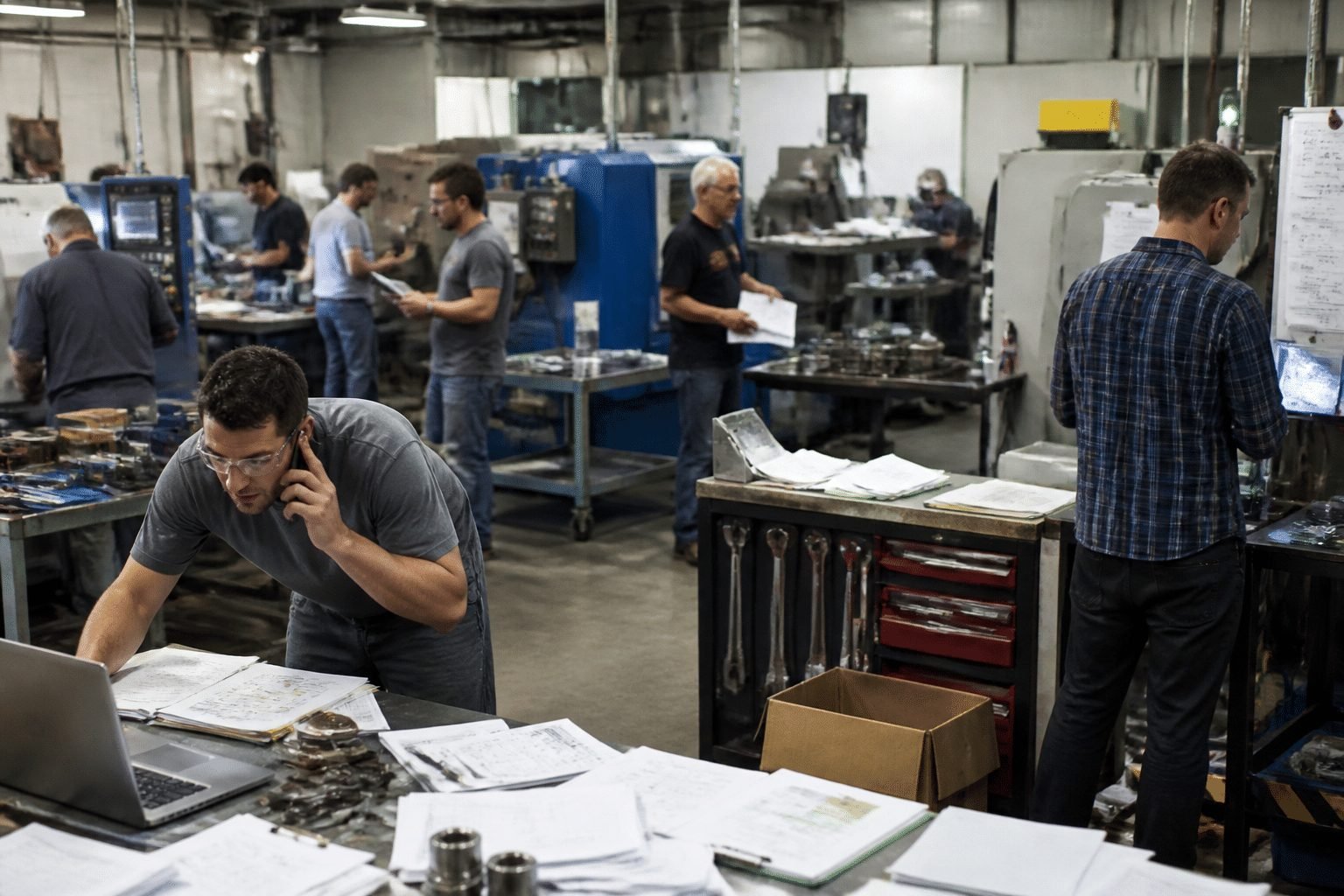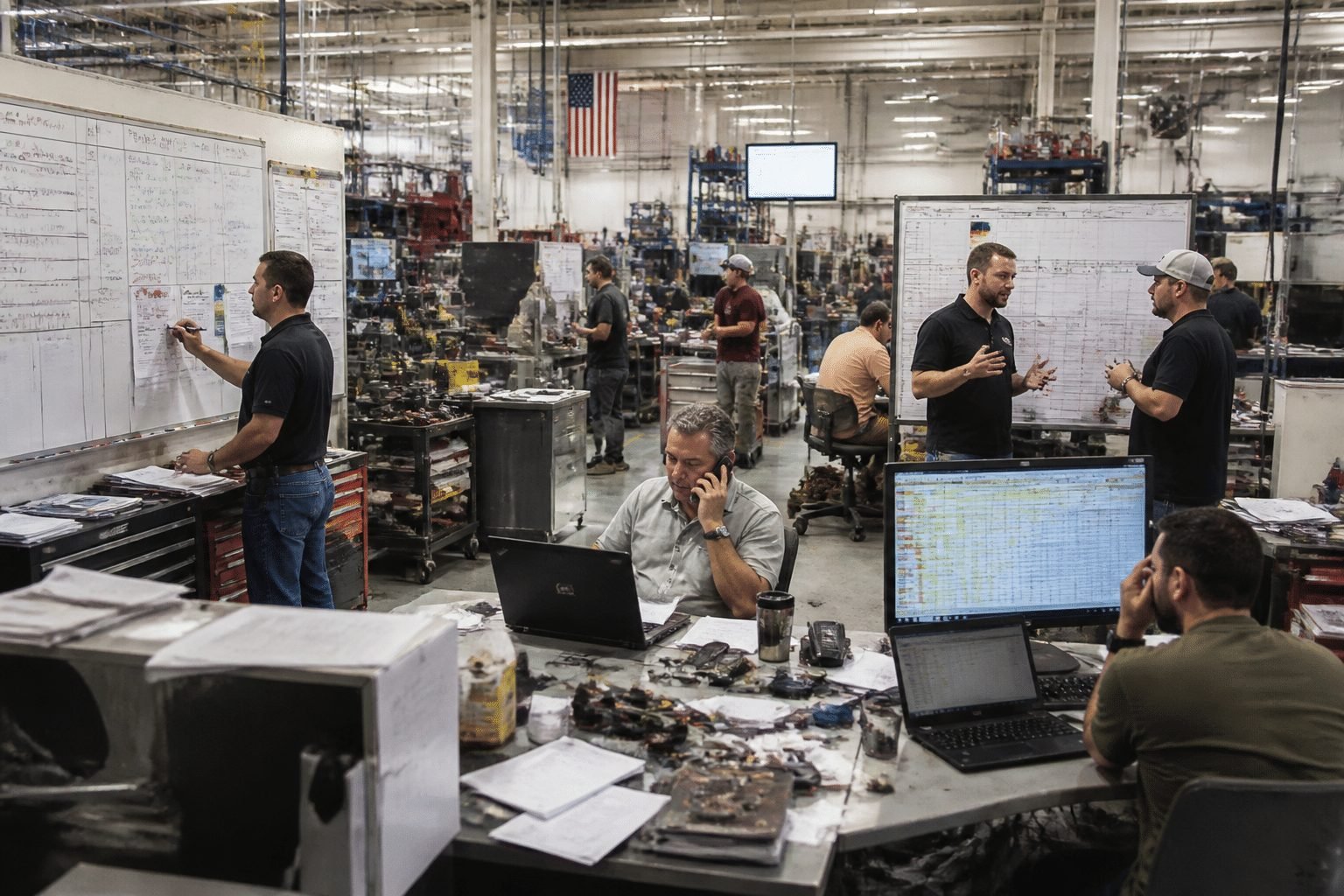
Picture this. It's 9pm, the floor is finally quiet, and you're scrolling through your phone. An RFQ came in by WhatsApp at 11am. Your team is still pulling prices from Tally, checking a costing sheet, and waiting on someone to confirm a material rate. Meanwhile, a competitor already sent their quote before lunch.
Sound familiar? You're not alone.
A 2025 job-shop benchmark found that same-day quotes won 42% of opportunities, while quotes sent after five or more days won just 12%. Same drawings. Same buyer. Very different result. And a 2026 survey of 280 manufacturing leaders showed that only 15% of manufacturers answer RFQs in under 24 hours, so the bar for "fast" isn't even that high.
Here's the part that stings. Faster competitors usually aren't better than you. They aren't cheaper, and their parts aren't any cleaner. They just answer first.
It's Not Your Team, It's Your System
I want to be clear about something. Your people aren't lazy. They're probably working late already.
The real problem is disconnected data. Item rates sit in Tally. Costing lives in an Excel sheet only one person understands. The ERP you bought a few years back is running at maybe 40% of what it can do, so everyone works around it. Every quote means hopping between four places and copying numbers by hand. That takes days, no matter how hard anyone tries.
What This Guide Will Do
This guide breaks down why your quote turnaround time drags, and what a faster manufacturing quoting process actually looks like. You'll get a clear roadmap to reduce quote turnaround time, win more bids, and protect your margins while you're at it. No jargon, no hard sell.
First, let's look at what slow quotes are really costing you.
1. The Hidden Costs of a Slow Manufacturing Quoting Process

Most owners think a slow quote costs them one order. Sometimes that's true. But the bill is usually bigger, and a lot of it never shows up on any report.
The Money You Can Count
Let's use real numbers. Say you run a ₹15 Cr factory. One lost bid worth just 1% of yearly sales is ₹15 lakh in missed revenue. At a 20% margin, that's about ₹3 lakh of profit gone. (These are my own example numbers, not an industry average. Plug in your own.)
Then there's the time. One report citing Fictiv's data says manufacturers spend an average of 11.5 hours on each complex RFQ. Now picture your best estimator burning that time on a quote you never win. That's a salary paid for nothing.
Here's how a 3-day quote adds up:
Cost area | What it looks like in your factory |
|---|---|
Lost revenue | Buyer picks the first reply. You never hear why |
Wasted hours | Your best people chase rates instead of closing deals |
Reputation | Big customers see you as slow, and maybe disorganized |
Working capital | Costing uses stock data that's already wrong |
Margin blind spot | You only learn the real profit when the quarter closes |
The Costs Nobody Puts on a Report
A slow reply sends a message. Buyers from larger companies often read it as "this supplier might be slow at delivery too." I can't prove that for every buyer, but it matches what many owners tell me.
Then comes the inventory problem. If your costing pulls from stock numbers that nobody trusts, you quote on a guess. Cash gets stuck in material you can't quantify. And 62% of manufacturers in one 2026 survey report moderate to severe margin erosion between quoting and delivery. So even the quotes you win can quietly lose money.
Slow Quotes Are a Symptom
Here's the part that really hurts. A slow RFQ response is rarely a quoting problem alone. It's what poor visibility looks like when it shows up in sales.
One quoting case study describes how the pain spreads. Sales sees delays. Finance sees margin leakage. Operations cleans up the mess after the order lands.
And who feels all of it daily? You do. You're the one walking the floor to check job status, asking three people for one number, and wondering why the ERP still sits mostly unused.
So what does a system that fixes this actually look like? Let's find out where yours is breaking first.
2. Diagnosis: Why Your Current RFQ System is Failing at Scale
Let's be fair first. Nobody picked a slow system on purpose. Every piece of your setup made sense on the day you chose it. The trouble is that what works for ₹3 Cr stops working somewhere around ₹5 Cr, and nobody sends a warning.
The Tally, Excel and WhatsApp Trap
I get why this stack is everywhere. It's cheap. Everyone knows it. Nobody needs training.
But it has no production logic. Tally knows what you paid for steel last month. It has no idea how long your VMC takes to run a part or what the scrap rate is. So the estimator fills the gap from memory, and Excel holds the guesses.
And Excel is fragile. In a multi-level costing sheet, formulas tied to fixed cells can break when someone inserts a row, and one wrong quantity can ripple through every assembly above it. The same part also gets copied into five different sheets. Change the material rate once and you have to hunt down all five.
Here's what one quote often looks like:
Step | Where the data lives | What can go wrong |
|---|---|---|
RFQ arrives | WhatsApp, email or a phone call | Drawing is missing or buried in a chat |
Material rate | Tally or a supplier's old message | Price is weeks old |
Stock check | Someone walks to the store | Answer comes back hours later |
Process time | Estimator's memory or a floor call | Guess instead of a real number |
Costing | Excel sheet, copied by hand | Typo, broken formula, wrong version |
Final quote | Retyped into a Word or PDF format | Different from what the sheet said |
Six stops. At least four chances for human error. No wonder a quote takes days.
The ERP That Only Does 40% of the Job
Now the second common case. You bought an ERP a few years ago. It holds your item masters, maybe your BOMs. But quoting never got wired into it.
So what happens? The team builds workarounds. Excel sits next to the ERP, and re-entering data between them becomes normal. Paperless Parts points to exactly this pattern: spreadsheet silos and manual transfers into the ERP cause rework and missed information.
I can't give you a clean percentage for how many small-factory ERPs end up half-used. Public research doesn't define it well. But from what Indian owners tell me, it's common. And over time, the workaround stops being a workaround. It becomes the process.
When One Person Is the System
This is the part that should worry the MD most.
In a lot of factories, quoting really means one senior estimator, or the Ops Manager who just knows. They know which vendor is cheap on casting, how long a tricky part takes, and which customer always pushes for a discount. None of it is written down.
Then they're on leave for a wedding. Or they resign. Quoting freezes. One analysis of quoting bottlenecks notes the delay gets worse when the same estimator also handles production, purchasing or quality, and the business gets lost even when the factory has capacity.
So you can't take a week off. You become the backup system, and that's a risk no growing company should carry.
The good news? All three problems come from the same gap, and it can be closed. Next, let's look at what a fast quoting system is actually made of.
3. The Anatomy of a High-Speed Manufacturing Quoting System
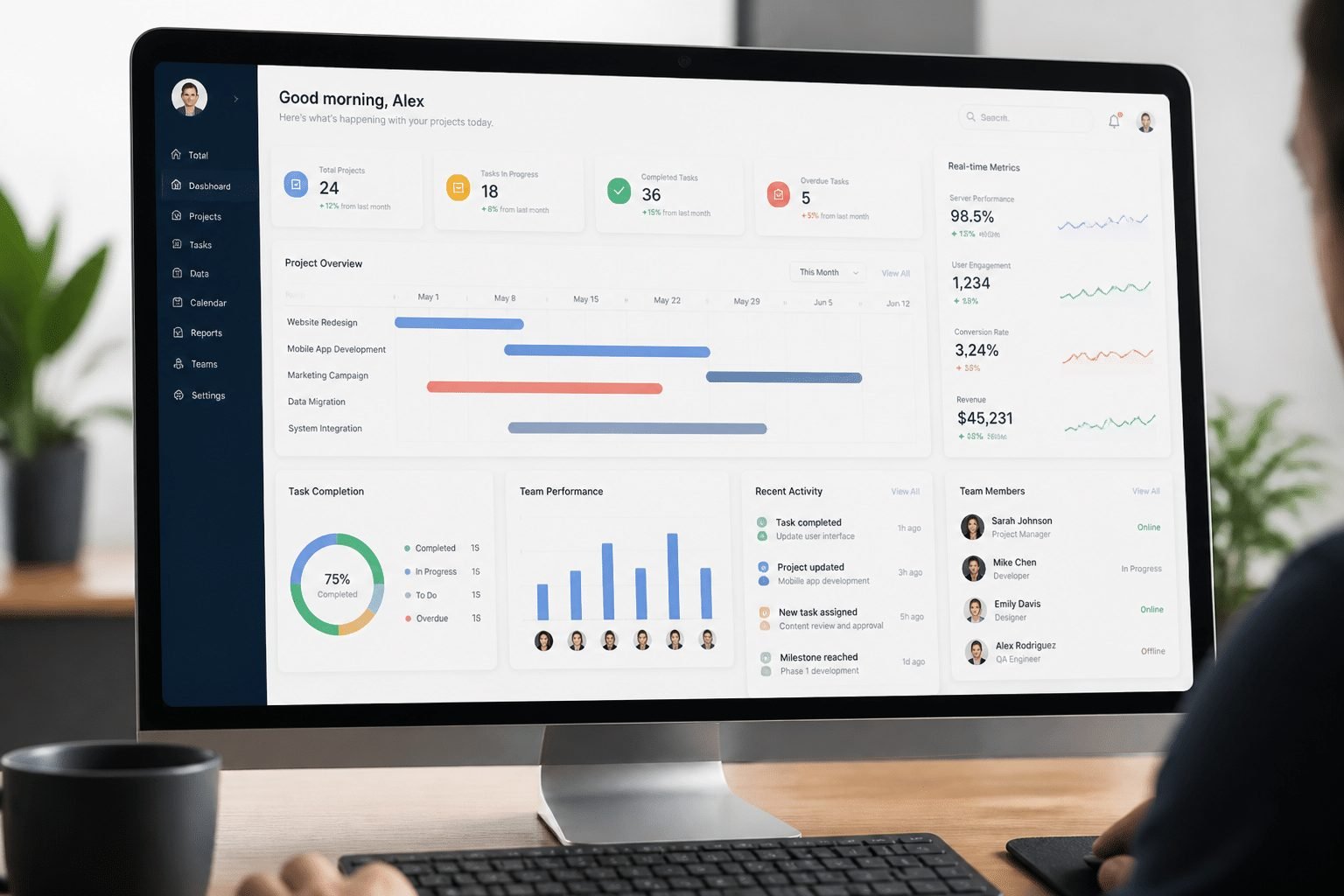
So what does a fast system actually look like? I'll be honest, when I first started reading about this, I expected a long list of fancy features. It's simpler than that. A fast quoting setup rests on three parts that work together. Miss one and the whole thing wobbles.
Here's the quick view:
Pillar | What it does | The problem it fixes |
|---|---|---|
Centralized data hub | Keeps rates, materials and costs in one live place | Four places, four different answers |
Automated costing engine | Applies your rules to calculate cost | Hand math, broken formulas, guesses |
Integrated workflow | Moves the RFQ from intake to dispatch with approvals | Quotes stuck in someone's inbox |
Let's take them one at a time.
Pillar 1: One Place for Your Numbers
Imagine asking "what's the rate for EN8 steel today?" and getting one answer. Not three. Not "let me check with purchase." Just one.
That's a centralized data hub, or a single source of truth. Material costs, machine hourly rates, labor costs and subcontracting rates all live in one spot, and they're kept current. Every price carries a date and a source, so you know how fresh it is. Some quoting tools, like ShopVox, let metal shops refresh material prices through manual updates or supplier feeds, because aluminum and stainless swing a lot.
One catch. "Live" doesn't always mean a stock-market ticker. Often it means a scheduled update or a clean ERP price table. That's fine. Fresh and trusted beats fast and wrong.
Pillar 2: A Costing Engine That Does the Math
Now the fun part. Once your data sits in one place, you set the rules once. Material plus scrap. Setup time plus run time. Machine burden. Outside processing like plating or heat treatment. Overhead. Then your margin on top.
The system reads the BOM and routing, applies those rules, and gives you a cost in minutes. No copying numbers between sheets. No formula that breaks because someone added a row. Your best estimator stops being a calculator and goes back to judging the tricky jobs.
A good setup also keeps cost and price in separate fields. So when you change your margin, the real cost underneath doesn't get overwritten. Small thing. Big difference.
Pillar 3: A Workflow That Moves on Its Own
Fast math is useless if the RFQ sits waiting for a reply from someone on leave. That's where integrated workflow comes in.
It follows the RFQ from the moment it lands to the moment the quote goes out:
RFQ arrives and gets logged, drawings attached.
The costing engine builds the estimate.
Quotes above your set limit go to a manager for approval.
A clean, branded quote goes to the buyer.
If you win, the quote turns into an order without retyping.
And here's what the MD gets out of it. You can open one screen and see every open RFQ, who's holding it, and how long it's been stuck. No walking the floor. No asking three people. You can see it from your phone at 9pm, which, let's face it, is when you'll check anyway.
That last step matters more than it sounds. Re-entering a quote into the ERP is exactly where errors creep in, so the best systems pass it along automatically.
These three pillars sound neat on paper. Getting them into a real factory, without stopping production, is another story. That's next.
4. How to Speed Up Your RFQ Process: A 4-Step Implementation Plan
Here's the good news. You don't need to rip out everything and start over. Most factories I hear about do better with small, boring steps than with one giant launch. And if you're the Ops Manager reading this and worrying about disruption on the floor, this plan is built with you in mind.
Step 1: Map How Quotes Really Get Made
Start with what's true today, not what the process document says. Pick three recent RFQs and follow each one from the moment it landed to the moment the quote went out. Write down every person, every tool, every wait.
The waiting is the part that surprises people. Value stream mapping guidance suggests recording queue time next to processing time, because the gaps between steps are usually where the days disappear. An estimator might only work on a quote for 90 minutes, but it sat for two days waiting on a material rate.
For your baseline, note:
Time from RFQ received to first review
Hours lost waiting for missing drawings or information
Who touched the quote, and in which tool
How many revisions it went through
One afternoon. That's all this takes. But it shows you the real bottleneck, and it's rarely the one you guessed.
Step 2: Put Your Costing Data in One Place
Now gather the numbers. Raw material rates, vendor rates, machine hourly rates, labor rates, plating and heat treatment charges. Pull them out of Tally, old WhatsApp messages and that one Excel file into a single master sheet.
Give every row a date and an owner. If steel is priced, who updated it and when? Keep cost and price in separate columns so a margin change never overwrites the real cost underneath.
It isn't glamorous. Still, even this step alone cuts a ton of hunting around, before you've bought any software.
Step 3: Write Down Your Quoting Rules
This is where the estimator's head gets emptied onto paper (gently, no one's being replaced). Define how you cost a fabrication job versus an assembly job. Material plus scrap. Setup plus run time. Machine burden. Outside processing. Then your margin.
Also set one standard quote template, and an approval limit, say any quote above ₹5 lakh goes to the MD. Separate one-time costs like tooling and fixtures from the per-piece cost, so they don't hide inside a vague markup.
Ask your operators for setup and inspection times. They know the real numbers.
Step 4: Pilot One Product Line First
Please, no big bang. Choose one product family or one repeat customer, and run the new method only there. Keep the old way as a fallback, and compare both against actual job costs for a few weeks.
Set expectations honestly. One shop, C&M Precision Tech, reported that within its first three months of using Paperless Parts it was nearing its goal of answering all quotes within 24 hours. So think months, not days, for the whole company.
Track turnaround, but also margin variance and win rate. A fast quote that underprices the job isn't a win.
A Sample 8-Week Plan
Timeline | What happens | Who's involved |
|---|---|---|
Week 1 | Map 3 real RFQs, record waiting time | Estimator, Ops Manager, Sales |
Weeks 2-3 | Build the costing master sheet, assign data owners | Purchase, Accounts, Estimator |
Week 4 | Write quoting rules, template and approval limits | MD, Estimator, Operators |
Weeks 5-8 | Pilot on one product line, compare to actual jobs | Pilot team only |
Your Quick Checklist: 4 Steps to Faster Quotes
Mapped three real RFQs, including the waiting time
One master sheet with dated rates and named owners
Written rules and one standard quote template
One pilot line, a fallback method, and 3 numbers tracked
Cluxn builds this kind of rollout around the tools MSME factories already use, so the floor keeps running while things improve.
So what does this look like when a real fabricator pulls it off? That's next.
5. Real-World Example: How a Metal Fabricator Cut RFQ Response Time from 4 Days to 6 Hours
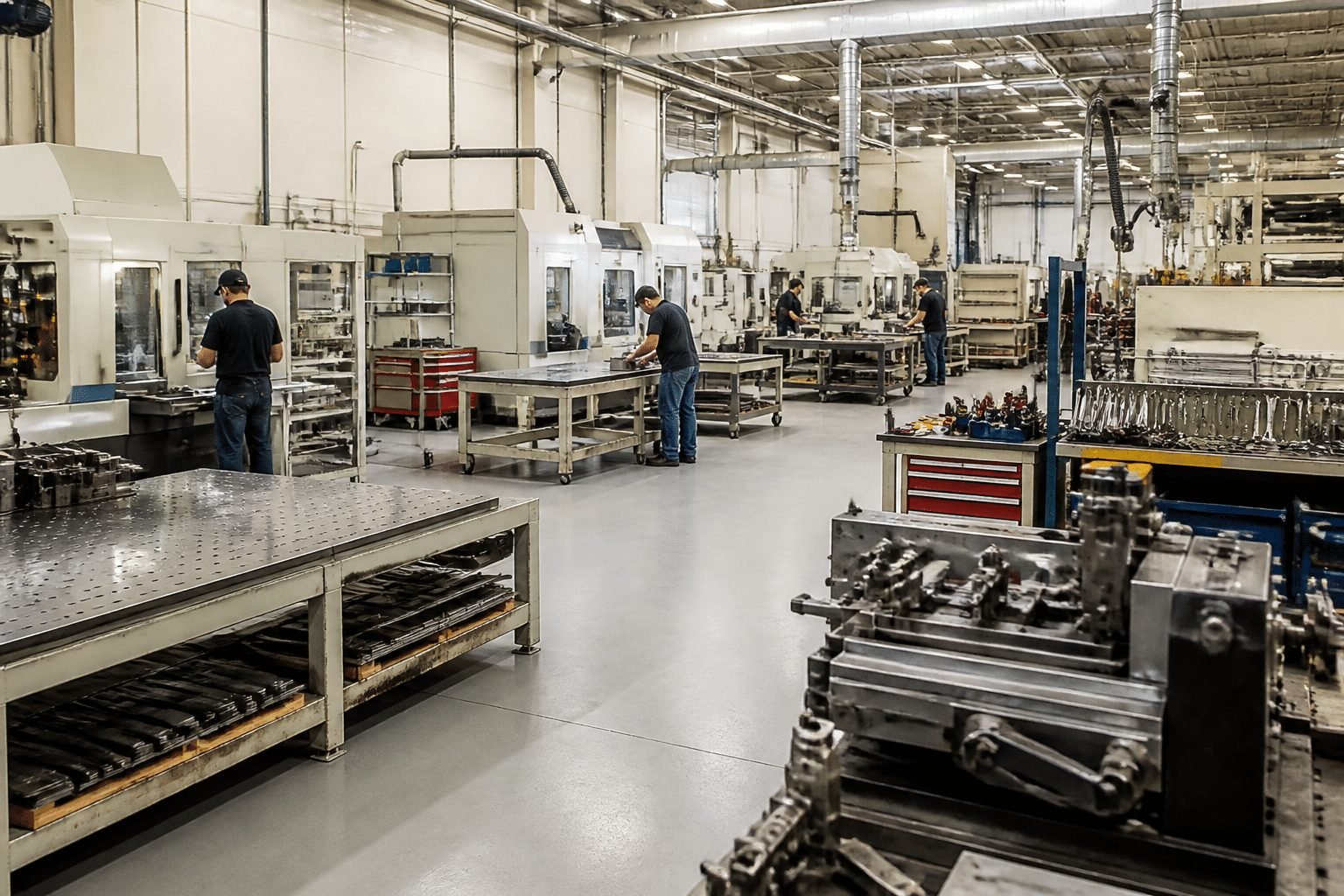
Quick note before we start. The factory below is a composite, built from patterns I keep hearing from Indian job shops. The numbers are illustrative, not an audited result. For something published, Voozo reported a small fabrication shop going from 48 hours to 4 hours on quotes, so the shape of this story is real. Treat the exact figures as a target, not a promise.
The Before: A ₹25 Cr Shop Where the MD Was the Bottleneck
Meet Rahul. Second-generation MD of a ₹25 Cr metal fabrication job shop near Pune. He took over from his father three years ago and inherited a mess.
Every RFQ landed on WhatsApp. Costing came from Tally, a giant Excel file, and one senior estimator's memory. Standard repeat-part quotes took about 4 days. And nothing above a certain value went out without Rahul checking it himself, usually at 10pm.
The damage was easy to see. They kept losing bids to shops that replied first. Worse, nobody knew the real margin on a job until the quarter closed. Rahul described it like this:
"I wasn't running the company. I was the integration layer between four systems and three people. If I got sick, quotes stopped."
The Fix: Small Steps, Ops Manager First
They didn't buy a giant package. They connected a quoting module to the tools already running, Tally and the existing ERP, so nobody retyped data.
Here's the smart part. Before anything was built, Rahul pulled in his Ops Manager, Suresh, who had been there 18 years and quietly doubted every new system. Suresh helped define setup times and scrap rates, and his operators checked the numbers. So the rules came from the floor, not from a consultant's slide.
The rollout followed the same phased path from earlier in this guide:
Weeks 1 to 4: mapped real RFQs, built the master rate sheet, wrote the costing rules
Weeks 5 to 8: piloted on one product line, old method kept as a fallback
Months 3 to 5: widened to the other product families
The After: Numbers Rahul Can Actually Trust
Repeat-part quotes went from 4 days to about 6 hours. Averaged across every RFQ, including the messy custom ones, response time dropped 85%. Quotes under the approval limit no longer waited for Rahul at all.
Metric | Before | After |
|---|---|---|
About 4 days on repeat parts | About 6 hours (85% lower on average across all RFQs) | |
Order win rate | Baseline | Up 15% |
Margin accuracy | A guess | 98% match to actual job cost |
MD's involvement | Checked every quote personally | Only quotes above the approval limit |
The margin number surprised Rahul most. He finally saw profit per job in the same week, not at quarter end.
"Last December I took 8 days off with my family. The phone rang twice. Nothing broke."
That's the real win. Not the dashboard, but the week away.
Of course, a good result depends on who builds it with you. So how do you pick a partner without getting burned again? That's next.
6. How to Choose a Technology Partner (and Avoid Being Burned Again)
Let's talk about the elephant in the room. Maybe you've done this before. A consultant took the advance, set something up, and went quiet around month four. Now every vendor email feels like a trap.
That fear is fair. And honestly, it's the real question behind every software decision you'll make.
Look for Trust First, Technology Second
A good partner doesn't open with a demo. They open with questions. How do RFQs reach you today? Who fills the costing sheet? Where does the steel rate live? If someone pitches a product before they understand your WhatsApp-and-Tally mess, that's your first warning.
Here are five questions worth asking:
Can you show two factories like ours where quoting got faster?
How will you model our real quoting process, not a generic one?
What can we change ourselves, and what costs extra?
How will this connect to Tally and our current ERP?
If we leave, do we get all our data back?
Then try a simple test. Hand them three old RFQs and watch what happens. A sales demo is easy. Real drawings are harder.
Ask for a Pilot, Not a Big Bang
Ops Managers, this one's for you. The right partner will suggest starting with one product line, keeping your old method as a fallback, and proving value before touching everything else. If they want to switch the whole plant on a Monday, walk away.
The contract should back this up. One software agreement guide suggests tying payments to milestones and holding back a final payment of roughly 30 to 40%, so you keep leverage until the work is done. Also get it in writing that you own your data and can export it. Lock-in worries most owners more than price does, and a clear exit clause fixes a lot of that.
Integration Beats "Cheapest"
Here's a trap I see often. One vendor for the website, another for the ERP, a third for automation. Each was the cheapest quote. None of them talk to each other. And guess who ends up connecting the dots? You do.
That's why the difference between an integrator and a reseller matters. A systems integrator is generally responsible for the whole working solution, while a reseller mostly sells the software license. So ask one blunt question: who is accountable when the pieces don't fit?
A real partner works with what you already run, Tally included, so complexity goes down instead of up.
Comparing Your Options Side by Side
Criteria | Local AMC vendor | Large ERP provider | Specialized partner like Cluxn |
|---|---|---|---|
Understands manufacturing | Knows your systems, rarely your shop floor logic | Knows the product, often built for bigger plants | Focused on MSME factories and their quoting, costing and workflow problems |
Implementation strategy | Fixes things as they break | Full rollout, often one big launch | Phased pilots, starting with one product line |
Works with Tally and existing tools | Sometimes, case by case | Often wants to replace them | Built around what you already use |
Long-term support | Reactive, may depend on one person | Formal, but a ₹15 Cr factory may not be a priority | Ongoing support tied to one connected solution |
Typical risk | Single point of failure | Cost and complexity | Needs proof on a pilot, like anyone else |
No option is perfect for everyone. But a partner who welcomes a small pilot and a clear exit is usually one you can trust.
So you've picked a partner and a path. One last shift in thinking is what makes all of this pay off.
Stop Competing on Price, Start Competing on Speed
Here's the thing I keep coming back to. Rahul didn't get faster quotes because he found smarter people. He had them all along. What changed was the system around them.
That's the whole argument, really. Your team isn't the problem. A process that makes them hunt through Tally, Excel and WhatsApp for one number is. Fix that, and your best estimator stops acting like a calculator. They go back to the jobs that need real judgment. You stop being the backup system. And yes, you might finally take that week off.
Speed isn't just about quotes, either. When your rates sit in one place and your RFQs have a clear path, you can see what's happening without walking the floor. Margins show up while the job is still running. That's visibility. And visibility is what lets a factory grow past ₹15 Cr without everything cracking.
So skip the big overhaul. Start small.
Your Next Step Doesn't Need to Be Big
Pick one product line. Map three real RFQs. Find where the days disappear. You don't have to buy anything to learn that much.
If you'd like a second pair of eyes, Cluxn offers a free 20-minute process mapping session. We'll look at how an RFQ moves through your factory today and point out the one bottleneck costing you the most. No sales pitch. No obligation. No follow-up campaign. You keep the map either way.
What you get | What it costs you |
|---|---|
A clear view of your biggest quoting bottleneck | 20 minutes |
A simple list of first fixes you can try yourself | Nothing |
An honest answer on whether you even need new software | No commitment |
Ready to see where your quotes get stuck?
Book Your Free 20-Minute Process Mapping Session
Bring one recent RFQ. Leave knowing what's slowing it down.
Your competitors aren't winning because they're better. They're winning because they answered first. Next time, that can be you.