
Here's a number that should bother you. Roughly 70% of an industrial buyer's journey is already done before they contact a supplier, according to Thomas. They've looked you up. They've compared you. Some of them have already crossed you off the list.
And you never knew they were there.
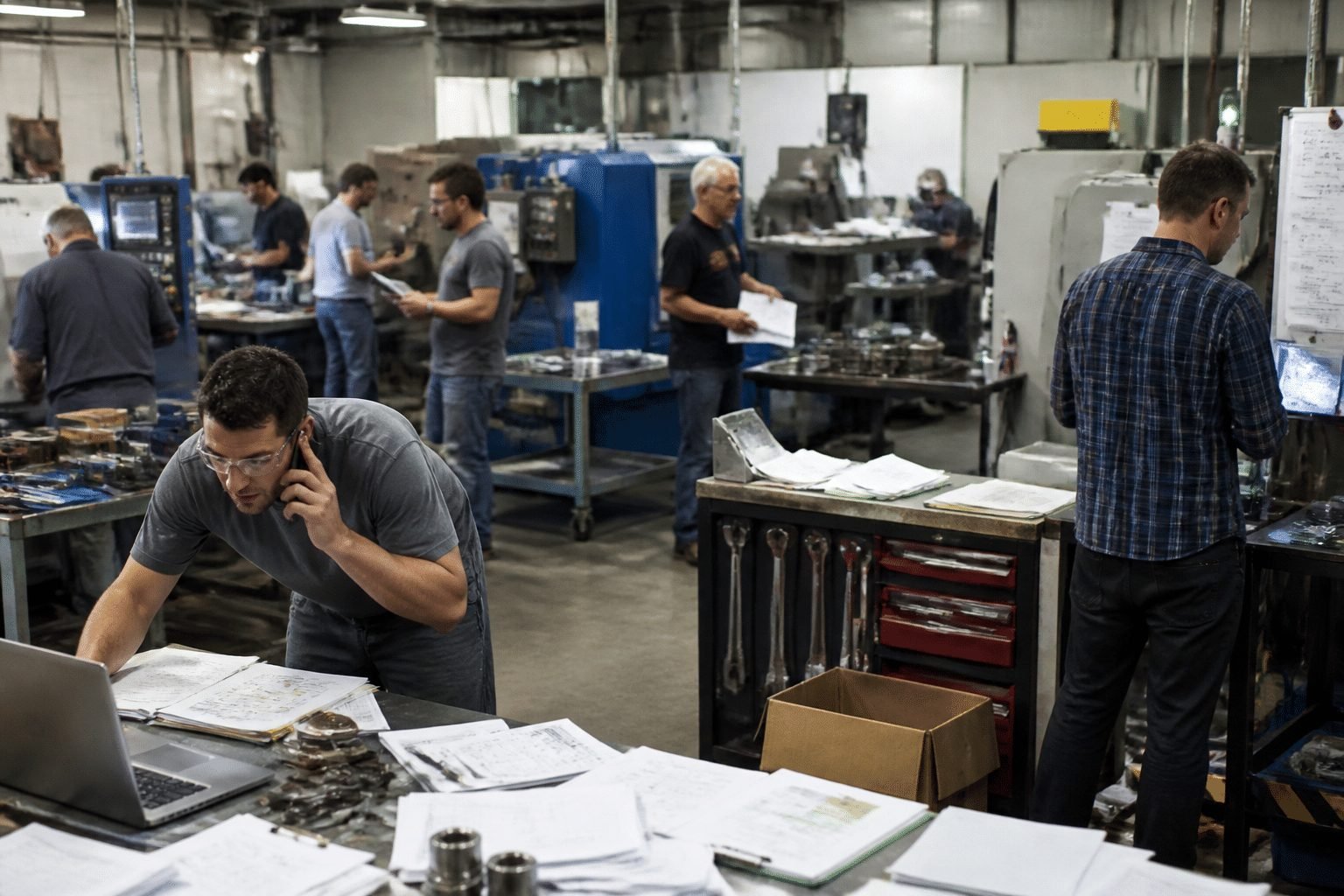
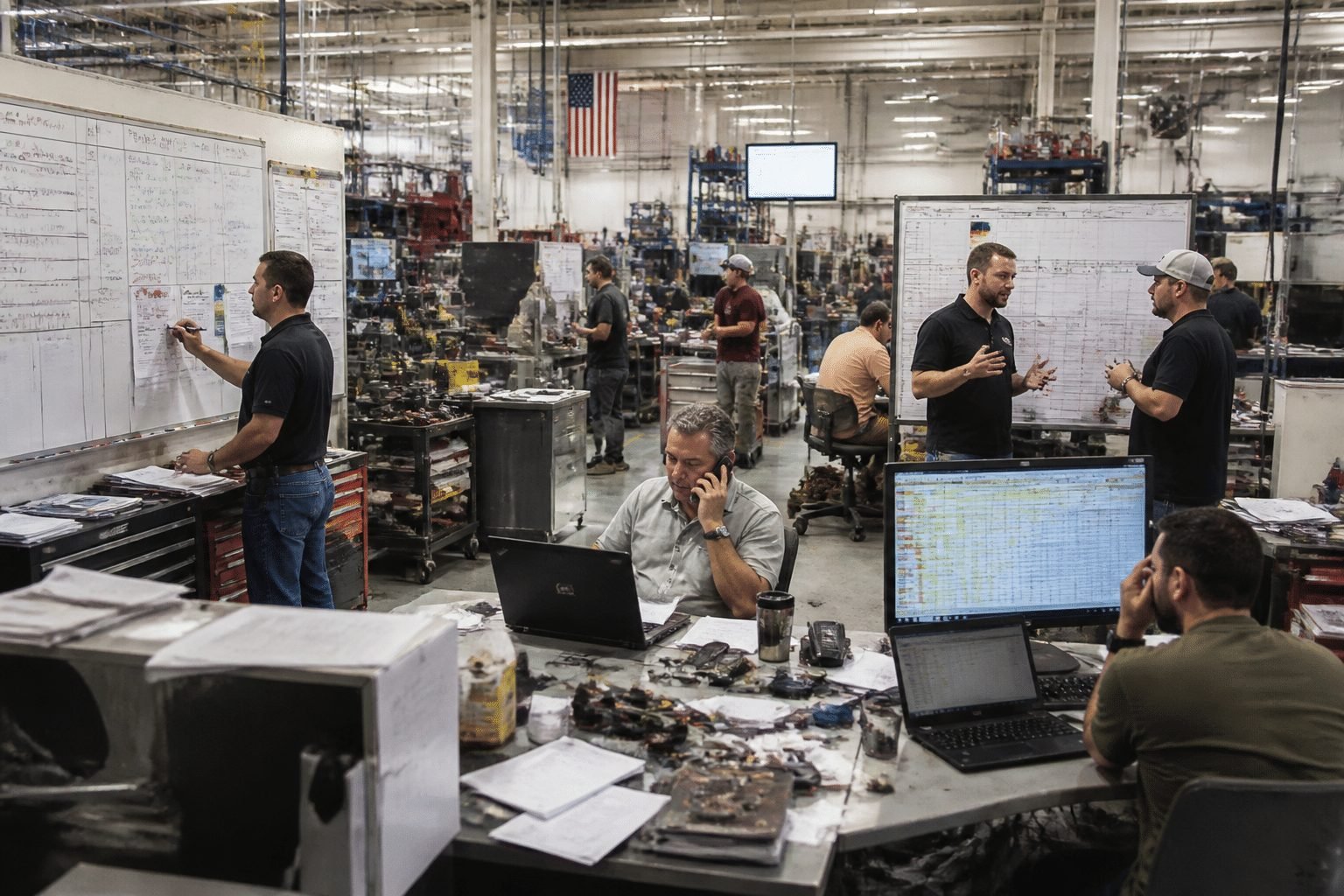
Now think about how your day actually goes. An RFQ lands on WhatsApp at 9pm. Someone digs through Excel to work out the costing, pulling numbers from four different places. Three days later, the quote goes out. Meanwhile, a competitor with a clean website and a searchable product catalog replied in a few hours. Their product isn't better. They just look more ready.
It stings, I know.
A complex quote done by hand can eat about 11.5 staff hours and often takes 3 to 5 days to return. In 2026, large OEMs and overseas buyers read that delay as a warning sign. PDFs and phone calls don't say "reliable." They say "hard to work with."
So here's the shift I want you to consider. An online product catalog for manufacturers isn't a nice extra on your website. It's a sales and operations engine that answers buyers while they're still quietly deciding. Specs, drawings, certificates and an easy way to request a quote, all in one place, working at midnight when you're asleep.
Let's look at why the old way keeps costing you bids, and what to do about it.
The Hidden Costs of 'Business as Usual': When Excel and WhatsApp Start to Fail

Tally, Excel and WhatsApp feel fine. They're cheap, everyone knows them, and the factory still ships. But somewhere past ₹5 Cr in turnover, the cracks start showing, and you usually don't see them until a bid is already gone.
Slow Quotes Make You Look Small
Picture a buyer in Pune or Dubai asking for a quote on a machined part. Your team sends three blurry phone photos of a drawing on WhatsApp. The costing comes back in a few days. A rival sends a clean page with specs, certificates and a request button.
Who looks bigger? Not you.
Speed matters too. One quoting speed benchmark says manufacturers replying within 24 hours win roughly 38 to 42% of quotes. At five days, that drops to about 10 to 15%. That's a benchmark, not a promise (fast teams may just be better organised overall). Still, the pattern is hard to ignore.
The Drag Nobody Puts on a Spreadsheet
Now look inside. The same price gets typed into Tally, then Excel, then a half-used ERP. Someone calls the stores to check stock. Someone else hunts for last year's drawing. And you, the MD, become the glue holding it all together.
Here's some rough math, and it's my own scenario, not a measured average. Say 10 people lose 10 hours a week to re-typing and searching. At ₹500 an hour, that's about ₹26 lakh a year. Gone, quietly.
Invisible Before the Conversation Starts
The bigger loss is the one you can't count. A Q4 2025 industrial buyer survey found 83% of respondents had shortlisted a supplier before any live contact. If you have no digital product catalog for B2B buyers, you're not on that list. Nobody rejected you. They just never found you.
Old Way vs. New Way
Metric | Old Way (Excel, WhatsApp, PDF) | New Way (Integrated Catalog) |
|---|---|---|
Quote speed | 3 to 5 days, rebuilt by hand each time | Hours, built from stored specs and prices |
Data accuracy | Copied between files, easy to get wrong | One source, updated once |
Professionalism | Photos and loose PDFs | Searchable specs, drawings, certificates |
Lead generation | Only people who already know you | Buyers searching for suppliers online |
So what does the better setup actually look like? That's next.
Defining the Digital Showroom: More Than Just a PDF on a Website
Let's clear something up. When I say an online product catalog for manufacturers, I don't mean a page of nice photos. I don't mean a 40 MB brochure parked on your homepage either.
What It Is Not
A static page can't tell a buyer if a part is in stock. It can't hand over a drawing. It can't fix itself when you change a material grade. It's a brochure with a web address. Pretty, sure. But somebody still answers every question by hand.
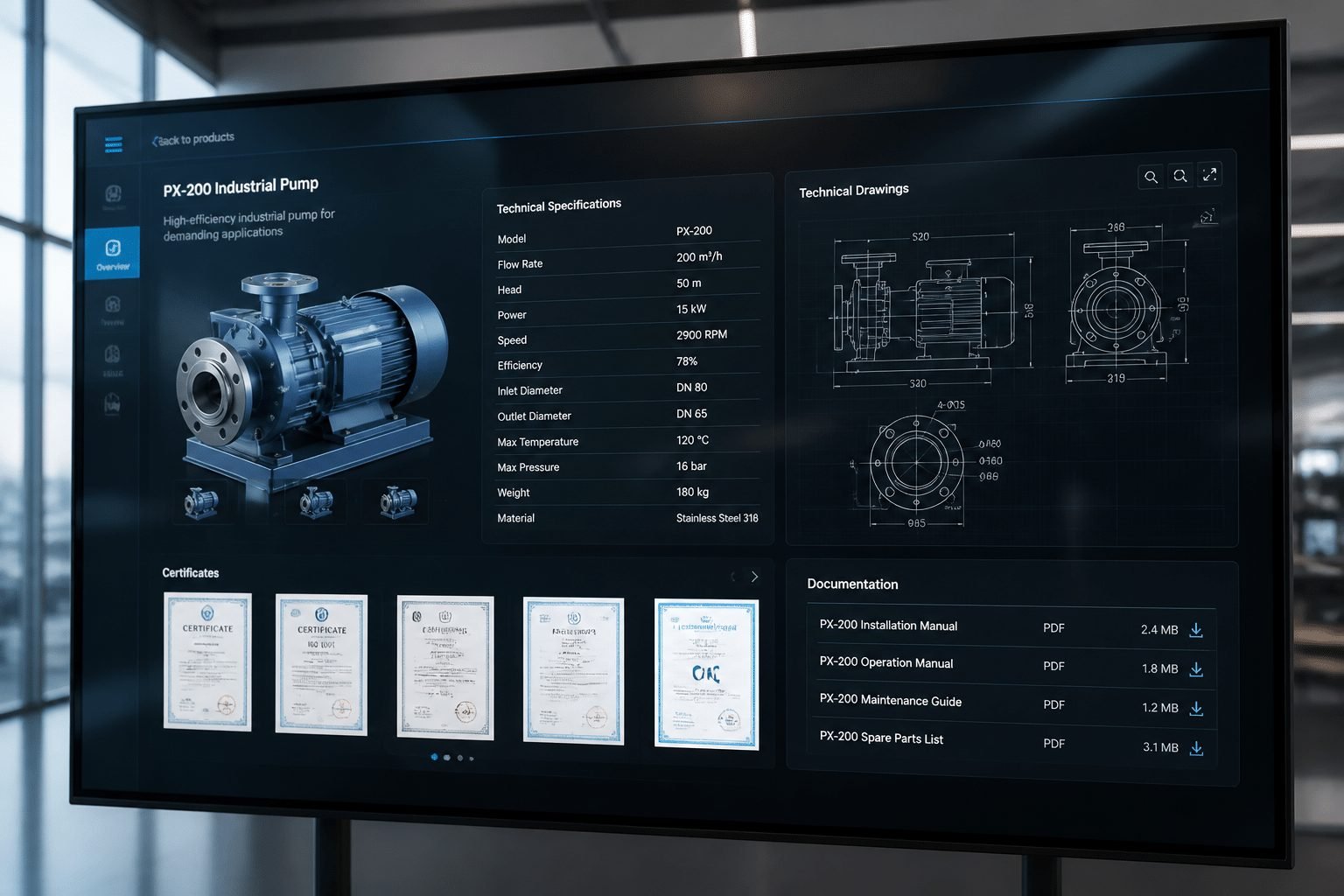
A real one runs on a database. Good manufacturing product catalog software stores each product as structured data: size, material, tolerance, certificates, files. Inriver describes this kind of system as one place that gathers raw product data, cleans it up, and sends it out to every channel that needs it.
One Place for Every Answer
Where's the latest drawing for that flange? On someone's laptop? In a WhatsApp group from March? We've all been there.
An ERP integrated product catalog fixes this. Specs, CAD files, material grades, compliance certificates and live stock levels sit in one record. You update it once, and everything else follows. That matters, because 91% of manufacturers say it's hard to keep product data consistent. Same product, three different specs. Buyers notice.
Here's how the hub works:
Catalog feeds... | What it does |
|---|---|
Website | Shows searchable specs, drawings and a quote button |
Sales team app | Lets reps pull the right data on their phone |
ERP | Shares pricing, stock and item codes both ways |
Customer portal | Gives buyers certificates, drawings and order history |
Your Sales Team That Never Sleeps
This is where it gets good. Distributors find their own specs. A buyer in Dubai grabs a certificate at 11pm. Your reps stop texting the office for a datasheet. HubSpot reports that sales professionals who offer buyer self-service tools are 47% more likely to exceed targets.
And for you, the MD? No more 10pm calls asking for the grade on a shaft. You're not the bottleneck anymore. You can leave for a week.
So what problems does this actually solve day to day? Let's get into that.
How a Smart Product Catalog Solves Your Biggest Business Challenges
A catalog sounds like a marketing thing. It isn't. Done right, it quietly fixes three problems that keep most MDs up at night: lost bids, fuzzy numbers, and being the person everyone calls.
Let's take them one at a time.
Win More Bids by Quoting in Minutes, Not Days
Think back to that 9pm RFQ on WhatsApp. With an online product catalog for manufacturers, the specs, material grades and base prices already live in one place. A buyer picks a part, adds a quantity and hits "request quote." Your team gets a clean request with nothing missing.
No blurry drawing photos. No "can you resend that?"
The quote that took three days now takes an hour or two, because nobody rebuilds it from scratch. And the buyer sees a company that looks organised. That matters when you're up against a rival who isn't better, just more polished. A solid digital product catalog for B2B buyers lets you look as big as the supplier you're competing with, sometimes bigger.
Here's what I'd measure first: how many hours between RFQ and quote. Cut that, and the win rate tends to follow.
Know Your Real Numbers Without Asking Three People
OK, this part isn't flashy. But it's where the money hides.
When you have an ERP integrated product catalog, stock levels, item codes and costs flow into the same record buyers see. So you stop guessing. You can see what's sitting on the shelf, what's moving, and what's been dead since last Diwali. That's working capital you can finally put a number on.
It also helps with per-job profitability. If the cost of each item sits next to its quoted price, you see the margin when you quote, not when the quarter closes. (Most MDs I'd talk to would pay good money for that alone.)
GST gets easier too. Item codes, HSN details and invoices pull from one clean source instead of being typed into Tally, then Excel, then somewhere else. Fewer retyped numbers means fewer slips, and less input credit quietly leaking away.
What you worry about | What the catalog changes |
|---|---|
Quotes taking days | Specs and prices ready, so quoting takes hours |
Stock is a guess | Live levels shared from the ERP |
Margin unknown until quarter end | Cost and price side by side per item |
GST data scattered | One set of item codes and tax details |
Stop Being the Bottleneck
Now the one you'd probably admit only after the second drink. You want to leave for a week and have the factory keep running.
Right now, who answers "what's the tolerance on this shaft?" You do. Or your sales head calls you, who then calls stores, who then calls you back.
A searchable catalog flips that. Your reps check specs on their phones. Dealers find their own datasheets and certificates. Your ops manager stops being a human search engine. Every question that used to need you now has an answer sitting in one place.
And your team? They tend to like it, because they stop getting interrupted for the same ten questions. That's also how you win over the Plant Head who's worried about disruption: show them what it takes off their plate.
Of course, not every catalog tool does all this. Some are glossy shells with nothing behind them. That's exactly where people get mis-sold, so let's talk about what to look for.
Essential Features for Manufacturers: How to Buy the Right Tool and Avoid Being Mis-sold
You've seen the demos. Pretty screens, smooth animations, a salesperson who says "seamless" every four minutes. Then six months later, half of it doesn't work and the consultant has stopped answering calls.
If that's happened to you, I get it. Fear of being burned again is the real buying criterion here, not price. So let's talk about what a solid tool actually needs, in plain terms you can take into any vendor meeting.
Search That Thinks Like an Engineer
An OEM buyer doesn't type "nice flange." They want a stainless steel flange, 50 mm bore, a specific pressure rating, with a certificate attached. If your catalog can't filter that way, they leave.
This is called parametric search. It lets buyers narrow products by size, material, grade, tolerance or standard. Look at how McMaster-Carr and Digi-Key work: you pick the specs you need, and the list shrinks to what fits. A good online product catalog for manufacturers should feel like that.
Also check these on the demo, with your own parts and not the vendor's sample data:
Material grades and technical specs stored as separate fields, not one long text blob
Downloadable CAD files and drawings on every product page
Compliance certificates (ISO, RoHS, CE) linked to the right part
Fast search that works on a phone, because that's where you and your buyers probably look at night
This matters even more if you run an online catalog for auto components, where one part can have dozens of variants and fitments.
Integration: The Answer to "I've Been Burned Before"
Here's the deal. A catalog that sits alone is just a prettier brochure. It has to talk to your Tally, SAP Business One, or whatever custom ERP you already run. Otherwise your team types everything twice, and you've built another disconnected system.
So ask the hard questions. Vendors who are serious will answer them in writing and show you a live test:
Is there a documented API that reads from and writes to my ERP?
Can I export all my product data in a standard format like CSV or JSON? (Fear of lock-in is fair. Test it before you sign.)
Can my own developer or another vendor work with the integration, without your special software in the middle?
Does it support my exact setup, like SAP Business One versus S/4HANA, or Tally-based workflows? "ERP integration" sometimes just means a CSV import.
What happens to my pricing rules and item codes if I leave?
A simple acceptance test works well: export a sample catalog, load it into a test system, and run one order from ERP to catalog and back without the vendor touching anything. If they hesitate, you've learned something.
A Quoting Engine That Ends the 3-Day Wait
This is the feature that fixes the slow-quote problem for good. Often called CPQ (configure, price, quote), it lets your sales team, or the buyer directly, choose options and get accurate pricing without anyone rebuilding costings by hand.
The proof is in how it's connected. One engineering-products maker linked a 3D configurator to SAP and cut sales-order entry from days to hours. The gain didn't come from nicer visuals. It came from selections turning into valid specs, prices and order data automatically.
Be careful, though. A configurator that can't pass its rules to your ERP is just a demo. Ask to see one real configured order flow through.
Buyer's Checklist
Print this and take it to your next vendor call:
Must-have feature | What to ask or test |
|---|---|
Parametric search | Can buyers filter by size, material, grade and standard? |
Technical specs | Are specs stored as fields I can search and update? |
CAD and certificates | Can buyers download drawings and certs per product? |
ERP integration | Show a live link with my Tally, SAP B1 or custom ERP |
Open API | Is it documented, two-way, and usable by other developers? |
Data export | Can I take all my data out, in standard formats, anytime? |
Quote or configure | Does a configured quote reach my ERP without retyping? |
Phone-friendly | Does search work well on a mobile screen? |
No tool gets a perfect score, and that's fine. What you want is honesty about the gaps. This is also where a partner like Cluxn fits, since it builds around the systems you already run instead of asking you to start over.
Once you've picked the right tool, the next worry is making sure it actually gets used. That's up next.
The Implementation Roadmap: Avoiding the 'Failed Project' Nightmare

Let's say the quiet part out loud. You've probably paid someone before. A consultant promised a lot, took the money, and went missing halfway through. Now the word "project" makes your stomach drop.
Fair enough. So here's the deal: you don't need a big, scary rollout. You need small steps, each one proving itself before the next begins. Nothing goes in front of a customer until your own team trusts it.
That's the whole idea. Two phases, four steps.
Phase | Step | What happens | Who sees it |
|---|---|---|---|
Phase 1 | 1. Data cleanup | Build one master product data sheet | Just you and a few key people |
Phase 1 | 2. Internal tool | Sales team quotes from the catalog | Your own team |
Phase 2 | 3. Dealer portal | Trusted distributors get access | A small group of partners |
Phase 2 | 4. Public website | The perfected catalog goes live | Every buyer, everywhere |
Phase 1: Get Your House in Order First
Start boring. Really boring.
Before any software, build a master product data sheet. One workbook, one row per part. Think SKU, material, key specs, lead time, minimum order quantity, certifications, and a "last updated" date. Add a column for who owns each row. Someone has to be responsible, or it rots.
Expect this to be messy. You'll find the same flange listed with three different specs (I'd bet money on it). Fix those now, while it's cheap and nobody outside is watching.
Then comes the part most people skip. Roll the catalog out internally, as a sales tool. Your reps and estimators quote from it instead of digging through old files. Quotes start looking the same, with the same numbers every time. That's your quote standardization, and it's also your proof.
If quote time drops, you'll see it within weeks. Your Plant Head sees it too. And your team? They help shape it, so they're far less likely to fight it later.
One rule: pick a single product family first. Don't try to load everything at once.
Phase 2: Open the Doors Slowly
Once your own people stop complaining (or at least stop complaining loudly), it's time for step three. Give your most trusted distributors a login. Maybe three or four of them. They can check specs, grab datasheets and send requests without phoning your office.
Watch what they get stuck on. Fix it. Quietly, with no customer watching.
Only then do you plug the catalog into your public website. By that point the data is clean, the quoting flow works, and the questions have mostly been answered. Nothing about launch day should surprise anyone. That's what protects your Ops Manager from the disruption they're worried about.
Why This Order Keeps You Safe
Here's what I like about it. Every step has a clear exit. If step two flops, you've lost a few weeks and a spreadsheet, not a year and a fortune. And because the work builds on your existing setup, you're not ripping out Tally or your ERP on day one. Cluxn tends to work this way, adding to what you run today instead of replacing it.
One more thing. Ask for your data back at every step, in plain formats. If you can leave anytime, you can relax a bit.
So what's the very first move? That's next.
Your First Step: From Digital Skeptic to Industry Leader
Let's step back for a second. We started with a buyer who'd quietly crossed you off a list you never knew you were on. Now you know why. Slow quotes, scattered files and a brochure PDF make a good factory look small.
An online product catalog for manufacturers flips that. Buyers find your specs at midnight. Quotes go out in hours, not days. Your reps stop calling you for a shaft tolerance. That's more bids won, more credibility with big OEMs, and a week away from the factory without the phone ringing.
The direction of travel is pretty clear too. Forrester expected more than half of B2B deals worth $1 million or more to run through digital self-service channels. The manufacturers who are easy to evaluate will win the bids.
Start Today With One Spreadsheet
Here's the good news. You don't need a budget meeting for step one. You don't need a vendor. You need a spreadsheet.
Open Excel tonight (yes, the same one you've been fighting with) and build a master product data sheet for one product family. Keep it simple:
SKU or part number
Product name and short description
Material and key specs, one column per spec
Lead time and minimum order quantity
Certifications
Last updated date
Data owner (who's responsible for each row)
It costs nothing. It risks nothing. And whatever tool you pick later, even if you pick none, this sheet is the foundation. You'll also spot the messy bits early, like the same flange listed three ways.
Let's Talk, No Pressure
I know you've been burned before, so I'll keep this simple. Nobody's asking you to rip out Tally or your ERP.
Ready to build a sales engine that works for you 24/7? Let's have a no-obligation conversation about how a catalog can be built around your existing processes, not the other way around. Cluxn works with what you already run, and you can even start by sending one product sheet to see how it could look.
Talk to Cluxn about your catalog, no strings attached