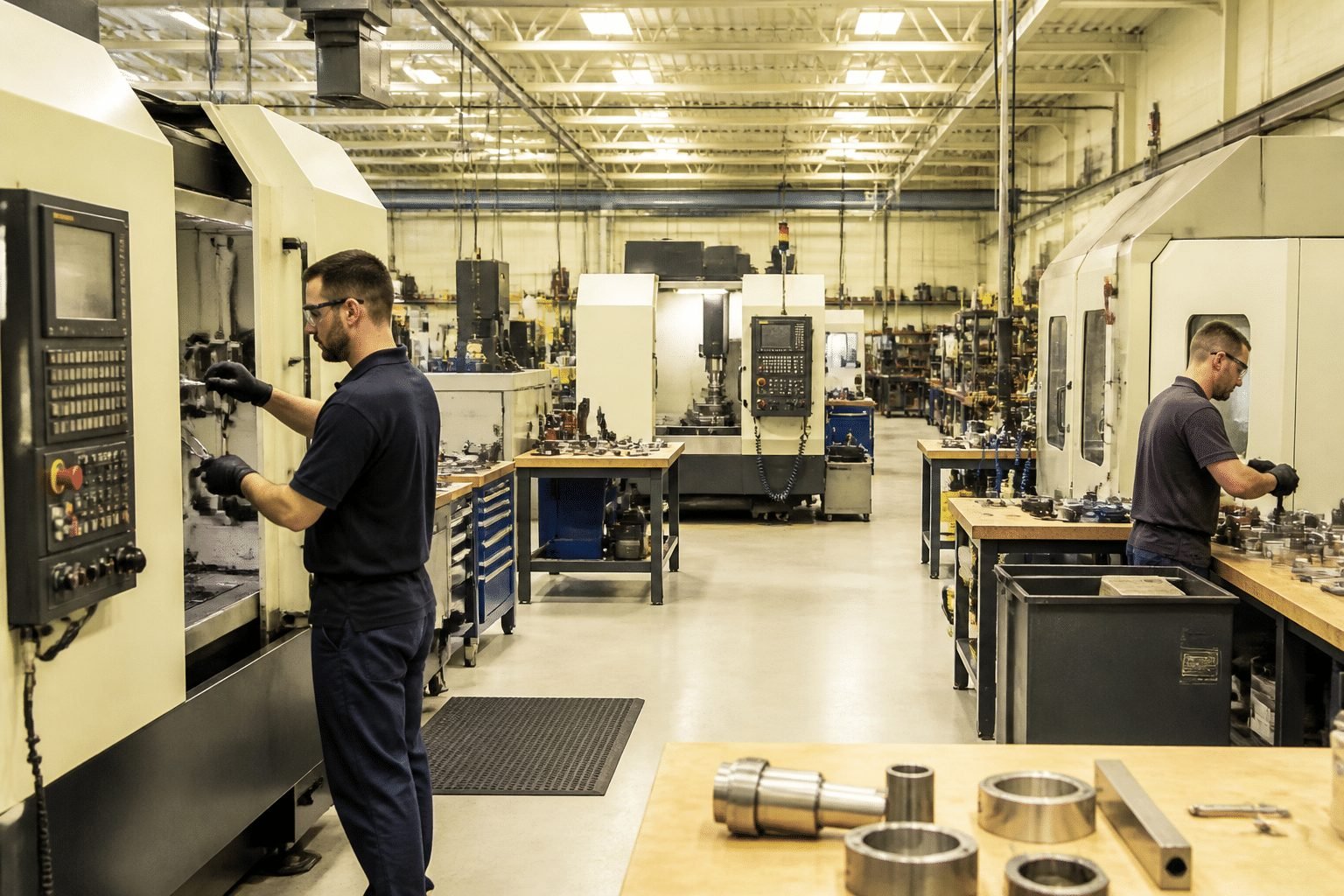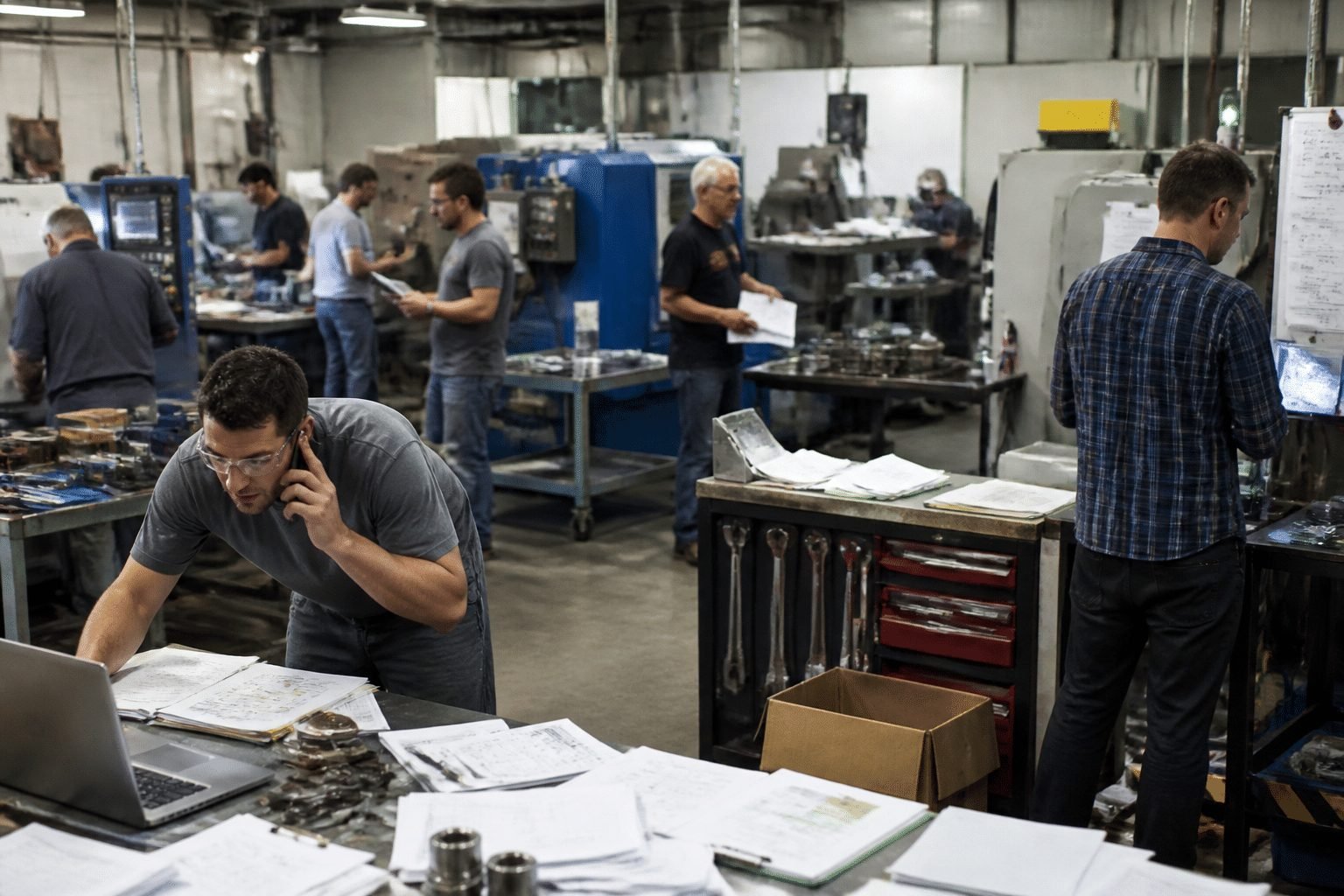

It's October 2026. The deadline you kept pushing to "later" has already come and gone.
For pharma units with turnover between ₹5 and ₹250 crore, the extra time ran out on 31 December 2025. The Centre had granted it through G.S.R. 127(E), dated 11 February 2025, and it came with a catch: you had to file an upgrade plan first. So if you haven't finished the work, you're already overdue. That's a hard thing to read at 11pm after the floor has closed. I know.
Compliance feels like a cost, but non-compliance is a business-ending event.
The shift is real, too. The old Schedule M was mostly about rooms and equipment. The revised version, notified in December 2023, wants a full quality system that lines up with WHO-GMP. Think risk assessments, validation records, deviation files and proof that your team actually follows the procedures. Not just a binder on a shelf.
Now, let's be honest about the other fear. Maybe you've been burned before. A consultant or software vendor took the money, vanished halfway through, and left you with a system nobody used. So when someone says "just go digital," your guard goes up. Fair enough. Rules like this feel confusing, and handling them alone is stressful (and lonely).
Here's the good news. You don't need a huge budget or a Big Four team to fix this. You need clear SOPs that your people can follow and your auditor can trust.
This guide breaks the new requirements into plain language. We'll focus on SOPs, show you where to start, and aim for more than a pass on inspection day. We're after a plant that runs better, week after week. Let's get into what the revised rules actually ask of you.
From Regulation to Reality: What the Revised Schedule M Actually Means for You
Let's clear something up. This isn't a routine update where you tweak a few forms and move on. It's India's GMP rulebook being rebuilt to sit next to WHO-GMP.
The Big Shift: From Checklist to Quality System
The old Schedule M asked, "Do you have the right rooms and machines?" The revised one asks, "Can you prove your system catches problems before they reach a patient?" That's a proactive pharmaceutical quality system, with risk management, change control, deviations, CAPA and yearly product reviews built in.
Here's the quick side-by-side.
Area | Old Schedule M | Revised Schedule M (WHO-GMP) |
|---|---|---|
Core idea | Reactive QA: fix it after it fails | Proactive PQS: spot risks early |
Focus | Premises and equipment | Whole quality system |
Documentation | Basic records and SOPs | Data integrity, audit trails, proof of use |
Risk | Rarely written down | Formal quality risk management |
Suppliers | Light checks | Approval, audits, traceability |
Management | Mostly hands-off | Responsible for reviews, at least yearly |
What It Means for Your Turnover Slab
Your slab decides your clock, but not your direction. Bigger manufacturers had to comply earlier. If you sit between ₹5 and ₹250 crore, your extra time is gone, as we covered above. Units under ₹5 crore got a separate, longer timeline, so check your exact date with the licensing authority.
How ready is everyone else? One industry estimate says only 25 to 40% of roughly 8,500 small and medium units are compliant or close. It's an estimate, not a census. Still, you're not alone.
Also, money exists. The PTUAS scheme backs upgrades, with reported support of about 10 to 20% and up to ₹1 crore per unit. Rules change, so verify the current notice before you spend.
Risk Versus Reward
The downside is real. Think license trouble, rejected consignments and lost buyers. In the Tamil Nadu cough-syrup case, an inspection of Sresan Pharmaceutical Laboratories reportedly found 364 violations, 39 of them "very serious". Your plant isn't that plant. But inspectors now look for exactly those gaps.
Now the upside. India's pharma exports hit US$30.47 billion in FY2024-25, and more than half goes to strict markets like the US and Europe. That's a lot of buyers who want proof. So early movers can reasonably expect easier supplier approvals, a shot at bigger tenders and a business that looks better to investors.
So what actually holds all this together? Your SOPs. Let's look at why.
Why Your SOPs are the Backbone of Sustainable Compliance

Here's something I wish more owners heard early. A regulation is just words on paper. An SOP is where those words turn into what your people actually do at 9am on a Tuesday.
SOPs Are the Bridge, Not the Binder
The revised Schedule M tells you what a good quality system looks like. It doesn't tell your stores clerk how to log a delivery. Your SOPs do that. They're the playbook your team runs every shift, and the proof your auditor wants to see.
And that's the catch. An SOP written only for inspection day gets ignored by everyone else. A good one is short, clear and used. Actually, that last part matters most: used.
The pain shows up when paper or shared-drive SOPs drift. Old copies stay at workstations. Files get renamed "final2" and "latest." Nobody can prove which version an operator was trained on. Weird how a plant can pass on paper and still fail in practice, right?
Where SOPs Hit Your Money
Compliance sounds like a cost center. But the same SOPs that please auditors also plug leaks you've probably felt for years.
Material receipt SOP: Every delivery gets checked against the invoice, supplier details and batch, then logged the same day. That cleans up the data behind GST input credit, so you stop losing it to missing or mismatched records. It's a data collection problem, not a compliance one.
Batch record SOP: Actual quantities, yields and wastage get captured as the batch runs. So you know your margin per batch before the quarter closes, not after three people argue over a spreadsheet.
Digital SOP system: Approvals, training and deviations show up live. The MD can check status from his phone at night instead of walking the floor. A Ferring Pharmaceuticals case study reports 60% less audit preparation time after connecting electronic batch records and document management. That's one company's result, so treat it as a sign, not a promise.
Here's how it all connects:
What the SOP covers | Business pain it fixes |
|---|---|
Material receipt and storage | Inventory control, GST input credit leakage |
Version control and training records | Audit readiness |
Live approvals and status | Real-time visibility for the MD |
Batch records and yield tracking | Costing accuracy |
Supplier and invoice matching | Clean GST data |
Even a small setup helps. One low-cost GMP guide points small plants toward simple barcode scanning for receiving and issue, which beats guessing.
The 40% ERP Problem
Now the awkward one. Many plants already own an ERP that's only partly used. Maybe 40%. The rest runs on Excel, WhatsApp and memory.
Software isn't the issue. Missing process is. If nobody has defined who enters what, and when, the tool just sits there. An SOP fixes that. It says the GRN is posted before material moves, the batch record closes before release, and nothing skips a step.
Get that right and the same ERP can go from 40% used to something closer to 90% useful. Same system. Better habits.
So where should the rewrite begin? Some areas carry far more risk than others.
4 Critical Areas Requiring Immediate SOP Overhaul for Revised Schedule M
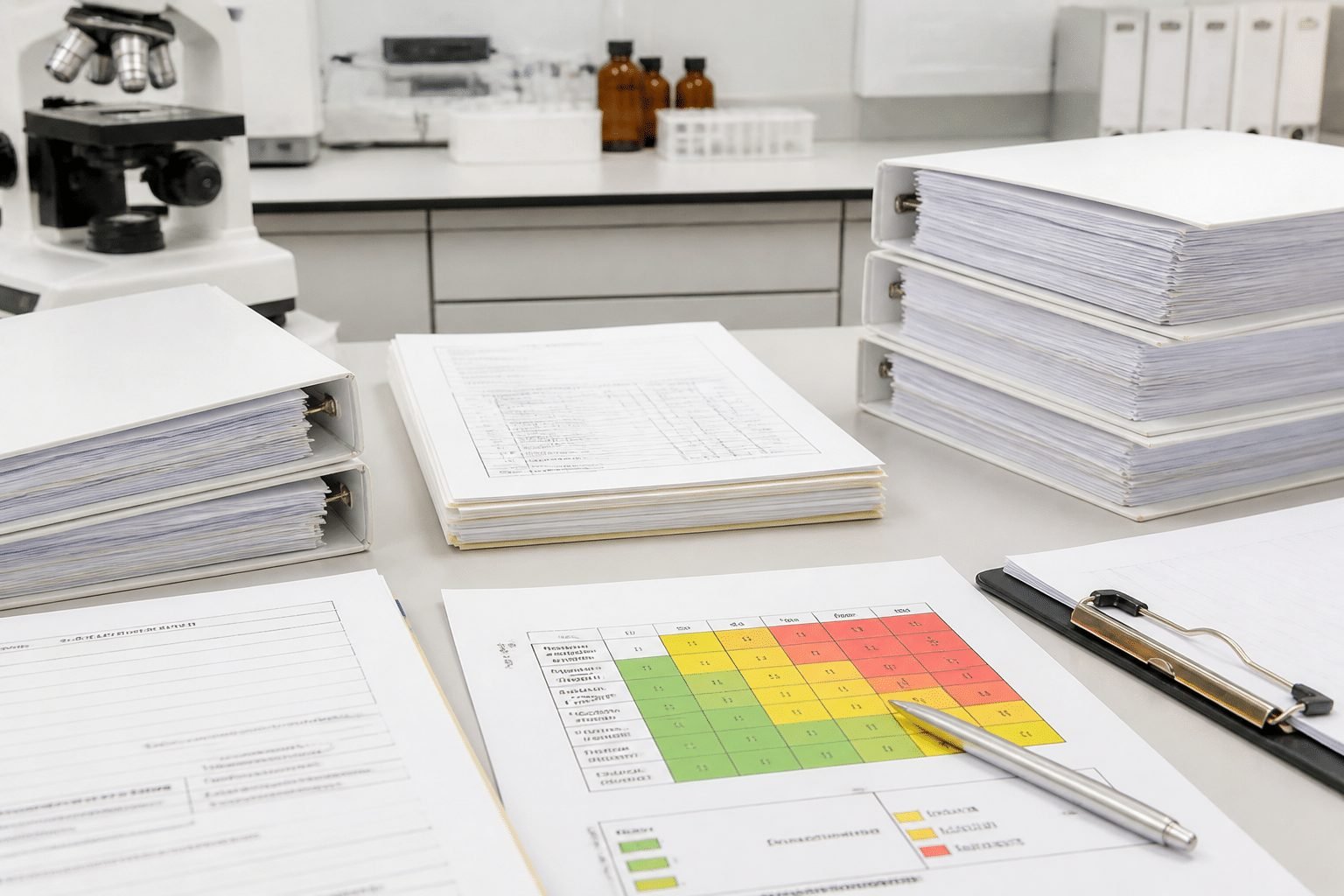
You can't rewrite every SOP in one go. Nobody can. But four areas keep showing up in inspector questions, so start there.
1. Pharmaceutical Quality System and Quality Risk Management
This is the big new idea. Revised Schedule M, notified through G.S.R. 922(E) on 28 December 2023, asks manufacturers to run a documented PQS with quality risk management built in. Not a poster on the wall. A working system.
So what SOPs do you need here?
A risk assessment SOP. It says who scores risks, how, and what happens at each score.
A market complaint SOP, so every complaint gets logged, investigated and closed.
A product recall SOP, with a mock recall you actually test.
A management review SOP. Leadership reviews the system at least once a year, with minutes on file.
Common risks worth writing down: cross-contamination on shared equipment, supplier variability in APIs or excipients, and mix-ups in packaging and labelling.
Before: Risk lives in the QA head's memory. After: Every risk has a score, an owner and a review date.
2. Data Integrity and Computerized Systems
OK, this one keeps plant owners awake. An inspector who suspects backdated entries or shared log-ins will question everything else too.
Your SOPs should follow 21 CFR Part 11 principles, even if you only supply the Indian market. They need to cover:
Electronic records that are attributable, legible, original and complete (the ALCOA+ idea)
User access control, with one person, one login. No shared passwords
Data backup and recovery, including restore tests, not just backups
Audit trails that are switched on, protected and reviewed on a schedule
Need a starting point? Leucine's data integrity audit readiness checklist runs 40-plus points, and you can trim it to your plant.
Before: Manual entries in Excel that anyone can edit. After: Time-stamped logs from equipment with secure audit trails.
3. Production and In-Process Controls
Paper batch records are where "I'll fill it in later" lives. And later is exactly what inspectors catch.
Here's what your SOPs should lock down:
Digital batch manufacturing records (BMRs): Steps appear in order, and required fields can't be skipped.
Real-time process monitoring: Temperature, mixing time and compression force get captured as the batch runs.
Deviation management: Every deviation is logged the same shift, investigated, and tied to a CAPA.
Change control: A new supplier, batch size or machine setting gets assessed before it's used, not after.
The fix is boring on purpose. If a deviation repeats three times, the SOP itself is probably wrong. Change it.
Before: Handwritten records completed at the end of the shift. After: Live entries, flagged deviations and QA review before release.
4. Material and Warehouse Management
Inventory chaos is a quality problem, not just a stock problem. If you can't say which lot went into which batch, you can't trace anything during a recall.
Your SOPs need to cover:
Vendor qualification: Approve suppliers, audit them, and keep an approved list that's actually current.
Goods receipt: Scan a barcode or QR code at the dock, check it against the invoice, and move the material to quarantine.
Expiry and status control: Clear QUARANTINE, APPROVED, REJECTED and EXPIRED labels, with only authorised users changing them.
Traceability: A clean line from raw material lot to finished product batch.
Budget matters here. For a small plant, 1D barcodes or QR labels linked to a controlled inventory register usually give the best control per rupee. Just remember a QR generator alone isn't a compliant system. Unique IDs, segregation and retrievable records are what count. (This is also where that half-used ERP can earn its keep, and it's the kind of gap Cluxn helps plants close.)
Before: Stock counts based on guesswork. After: Scanned receipts, live expiry alerts and full lot traceability.
Quick Before and After Recap
Area | Before | After |
|---|---|---|
PQS and QRM | Risk kept in people's heads | Scored, owned and reviewed risks |
Data integrity | Editable Excel entries | Secure, time-stamped audit trails |
Production controls | End-of-shift paper records | Live BMRs and tracked deviations |
Materials | Guesswork on stock and expiry | Scanned receipts and full traceability |
That's the target list. Next up is how to audit what you have today and fix it in the right order.
Your 5-Step Action Plan to Audit and Implement Revised Schedule M SOPs
OK, so you know what's changed and where the risk sits. Now the real question: where do you start on Monday morning?
Here's the plan I'd follow. Five steps. No magic. And you can run it with the team you already have.
Steps 1 and 2: Build the Team, Then Find the Gaps
Step 1: Form a cross-functional team. Don't hand this to IT or to one tired QA head. A revised Schedule M SOP program touches production, quality, stores and finance. So pull in one person from each. Production tells you what actually happens on the floor. Quality knows what the rules say. Finance spots the money leaks (like those GST input credit gaps from messy receipts). Give the group a leader, a weekly 30-minute slot and a clear deadline. That's it.
Step 2: Run a gap analysis. Take every SOP you have and map it against the revised requirements. Pull the PQS paragraphs straight from the gazetted text, not from a consultant's summary. Then, for each clause, ask three things:
Does an SOP exist?
Does it match what people really do?
Can we show a record that proves it?
Score each gap by product risk, how likely it is and how easily you'd catch it. Then rank them. Your top three come first. Everything else waits.
Here's a simple layout you can copy into a sheet.
Clause or area | SOP exists? | Followed on the floor? | Record available? | Risk (H/M/L) | Owner | Due date |
|---|---|---|---|---|---|---|
Quality risk management | Yes/No | Yes/No | Yes/No | |||
Deviation and CAPA | ||||||
Supplier approval | ||||||
Data integrity and audit trails | ||||||
Change control | ||||||
Product quality review |
Want a head start? Grab our Revised Schedule M SOP Gap Analysis Checklist. It's a free download, and it works in about 15 minutes.
Steps 3 and 4: Rewrite Simply, Then Roll Out Slowly
Step 3: Draft, review and simplify. Here's where most plants go wrong. They write SOPs for the auditor. Then operators ignore them.
Write for the person doing the job instead. Use short sentences. Add a flowchart where a decision happens. Put a photo of the correct label or setup next to the step. Keep each SOP to one or two pages if you can. Then ask an operator to read it and tell you what's confusing. Fix that. The goal is adoption, not a thicker binder.
Step 4: Phase the rollout and train by doing. I get why Ops Managers panic here. Nobody wants a plant that stops for a month. So don't change everything at once.
Pick one pilot area, say material receipt and storage.
Train people at the workstation, not in a conference room. Show it, let them do it, then check it.
Run the new SOP for two to four weeks and collect complaints.
Fix the unclear bits, then move to the next department.
That's slower on paper. But it's faster in real life, because mistakes stay small. And your floor team starts seeing the change as help, not a threat.
Step 5: Keep Reviewing So It Sticks
Here's the part people skip. Compliance isn't a project with an end date. It's a habit.
Build a review cycle into your pharmaceutical quality system. Look at deviations every month. If the same one shows up three times, the SOP is probably the problem, so change it. Run a self-inspection every quarter. Hold the management review at least once a year, with minutes on file. And retrain whenever an SOP changes, tied to the exact version.
Sounds like a lot? It's really just a calendar and a bit of discipline. Plants that do this don't panic when an inspector calls.
So what happens when you want that whole cycle to run without chasing paper? That's where the right tools come in.
Beyond Documents: How Technology Makes SOP Compliance Effortless and Audit-Ready
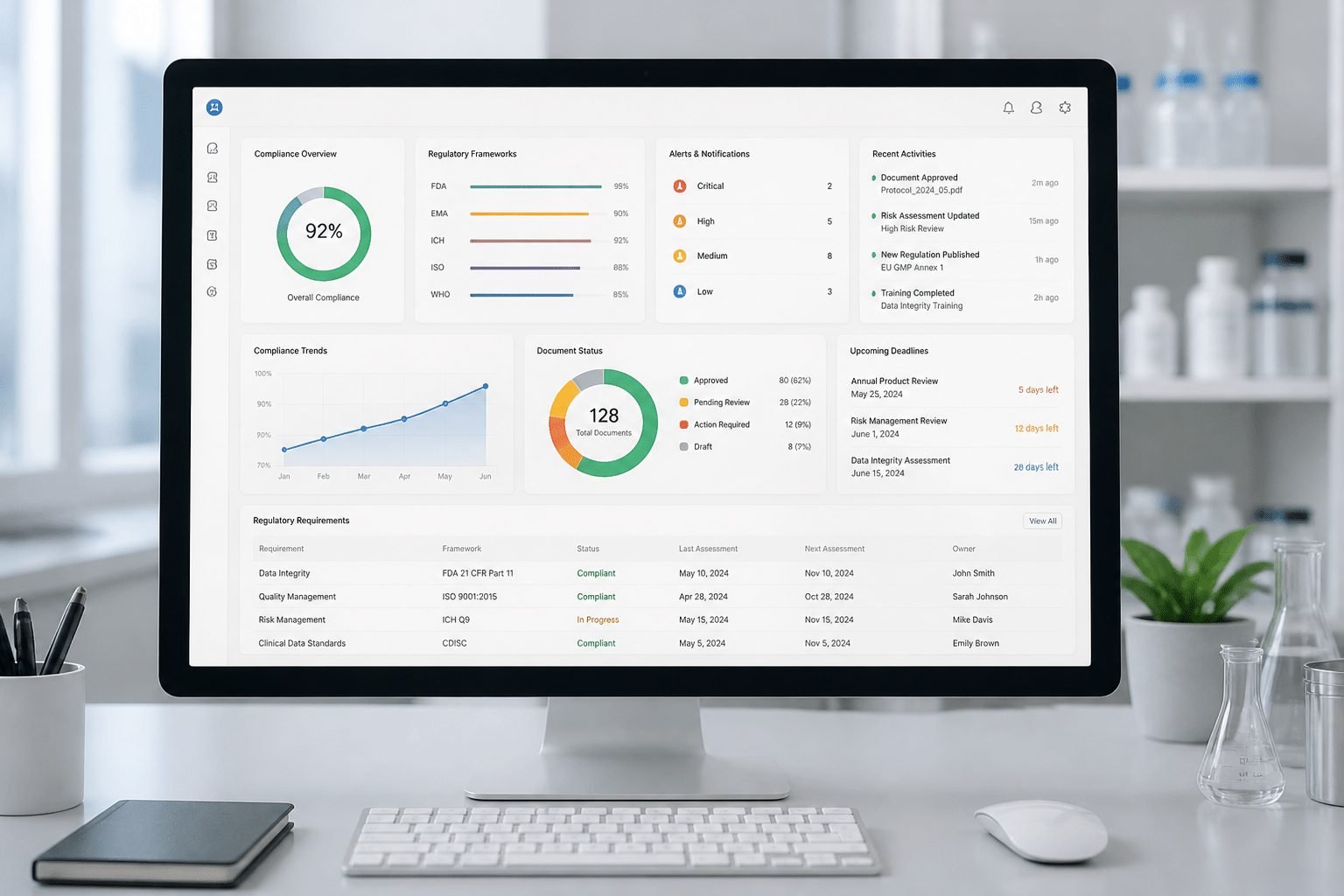
Picture this. An inspector asks, "Which version of the cleaning SOP was this operator trained on in March?" Three people look at each other. Someone goes to find a register. Twenty minutes pass.
That's the old way, and honestly, it doesn't survive the revised Schedule M for long.
The Old Way: Hundreds of Papers and No Certainty
Most plants I hear about run on printed SOPs, shared folders and a lot of goodwill. It works until it doesn't. Old copies stay pinned at workstations. Files get called "final2" and "latest." Training sheets say a person signed, but not which revision they signed for.
Then audit week arrives. Your QA head spends days pulling records from cupboards, chasing signatures and hoping nothing went missing. Sound familiar? It's stressful, and it's also how plants with decent practices still end up with findings.
The New Way: A System That Enforces the SOP
Here's the shift. A digital system isn't just a nicer filing cabinet. It's an active compliance engine that makes the SOP part of the work itself.
Take goods receipt. The operator scans the delivery, the system checks it against the invoice, and the material lands in quarantine. It can't be issued to production until QC approves it. Same idea at the other end: a batch stays on "Quality Hold" until the required checks are done and QA signs electronically. No signature, no release.
This could be a custom ERP module or a lighter workflow solution. Cluxn builds these around the operations you already run, so you're not starting over. (And yes, that half-used ERP you already own might be a decent base.)
Situation | Paper or shared drive | Digital workflow |
|---|---|---|
Which SOP version is live? | Check the file name and hope | Only the approved version is available |
Training proof | Sign-off sheet, version unclear | Tied to the exact revision |
Skipped QC step | Found later, if at all | System blocks the next step |
Audit preparation | Days of file hunting | Records pulled in minutes |
What It Gives You as the MD
Let's be real about why you'd do this. It's not for the software. It's for three things.
One source of truth. Stock, batch status and open deviations sit in one place. You see real numbers without asking three people.
Rules built into the process. When approvals and checks happen automatically, the plant doesn't depend on you standing there. Leaving for a week becomes realistic.
Reports on demand. When a large buyer or inspector visits, you can show training logs, revision history and signed approvals in a few clicks. That's what looks credible.
One vendor use case from BIOVIA reports about 30% shorter documentation cycles and 40% faster approvals. That's a vendor claim, so treat it as a direction, not a guarantee.
One caution. Software alone doesn't make you compliant. You still need SOPs for access control, validation and backups. But with those in place, compliance stops being a scramble and becomes routine.
So what does that routine do for your business beyond passing inspections? That's next.
Turn Compliance into Your Competitive Advantage
Here's the thing I'd want you to walk away with. The revised Schedule M isn't a punishment. It's a roadmap, handed to you by the government, for building a plant that buyers and regulators trust.
That trust pays off. As one Grant Thornton Bharat and FICCI report put it on 5 October 2026, India's next growth phase will depend on "quality, regulatory trust, supply-chain resilience, digital capability and innovation." Notice what's missing? Nobody said "cheapest." Quality is the new edge.
So where do you start? Same place we've been all along: SOPs your people can actually follow. Short ones. Clear ones. Ones that match what happens on the floor at 9am on a Tuesday. They're the base for quality, smoother operations and growth.
Technology is the accelerator. Once the basics are solid, a digital workflow keeps every version, signature and training record in one place, and it scales as you add lines or customers. But it only works on top of good SOPs. Not instead of them.
And the deadline? It passed on 31 December 2025, so no blanket relief is coming. That's fine. The goal now is inspection readiness you can prove, one step at a time.
Let's Start Small
Been burned before? Afraid of another failed project? We get it. Plenty of owners have paid a vendor who vanished halfway. So let's skip the big commitment.
Start with a simple, no-obligation conversation to map your key processes against the new requirements. Our goal is to give you a clear roadmap, not a sales pitch. You keep the roadmap, whatever you decide next.
Request a Free Compliance Roadmap Session
Cluxn works with MSME manufacturers, and we'll build around what you already run. You've done the hard part by reading this far. Now, let's take the next step together.